Where to Place an Air Fryer in Your Kitchen (Safety + Space Tips)
Safe, convenient air fryer placement tips. Find the best spot with airflow, workflow, and storage options.
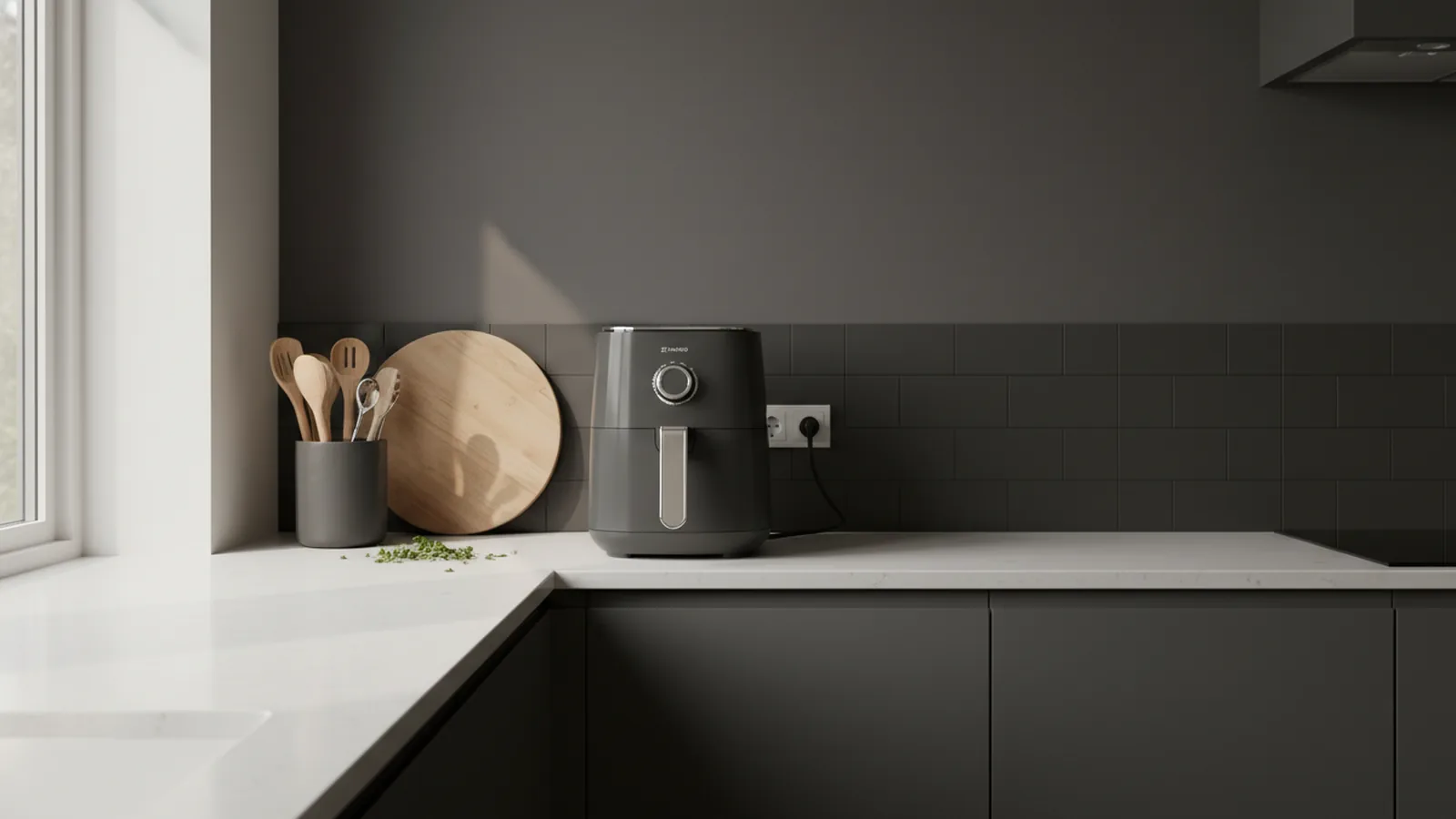
Optimal Air Fryer Placement
For most kitchens, the best answer to where to place air fryer in kitchen is: on a stable, heat-safe counter near your cooking zone, with room for hot air to move. Place it so you can load and unload food without reaching over other hot surfaces. It should also be easy to wipe down after spills. This setup keeps air fryer functionality smooth and makes daily use safer.
If you are asking where to put air fryer in kitchen for everyday cooking, start by thinking in “zones.” Use one zone for prep, one for cooking, and one for plating. Put the air fryer on the cooking zone edge closest to the sink or prep area, not in the far corner. That reduces carries across the room with hot baskets.
Next, check distance from nearby appliances and clutter. Many air fryers need a little breathing space, so avoid stacking them tightly between the toaster and microwave. When you plan for airflow in kitchen use, you also reduce the chance of uneven cooking.
- Pick a heat-resistant spot on a firm surface you can leave it on.
- Keep a clear path for you to open the drawer or basket fully.
- Choose a spot near outlets so cords do not cross walkways.
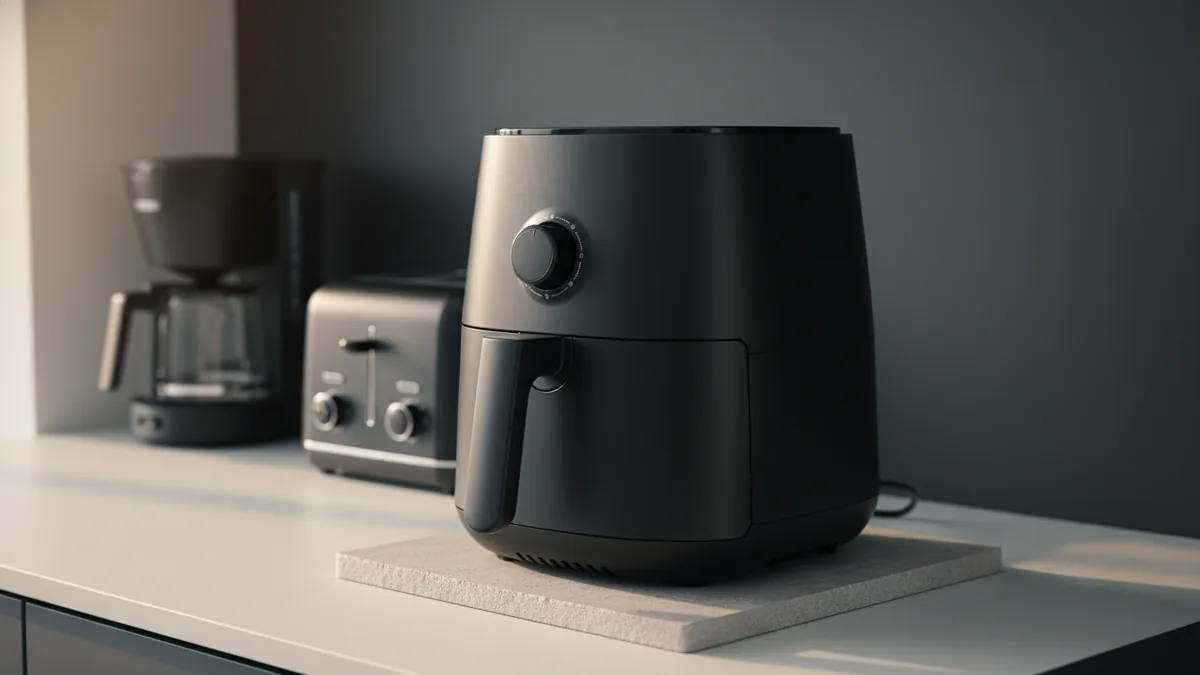
Safety Precautions
Air fryers should be placed on stable, heat-resistant surfaces. Use granite, solid wood rated for heat, or a dedicated heat mat designed for appliances. Avoid placing it on thin laminate, paper-covered counters, or anything that can scorch.
Also avoid putting the unit near water sources or flammable items. That means not beside the sink, dish area, or a wet countertop zone. Keep it away from curtains, paper towels, and open bags of cooking oil. If you splash water while cleaning, you do not want that water near the power inlet.
One more safety point: do air fryers heat up the kitchen? Yes, they do. They generate hot air and radiant heat that can warm nearby cabinets and walls over time. The cure is simple: use clearance and keep the vents unobstructed.
- Place the fryer on a level surface with no wobble.
- Keep it away from flammables like curtains, paper towels, and cardboard boxes.
- Do not place it next to a sink or where water can splash onto the unit.
- Never block air intake or exhaust vents during use.
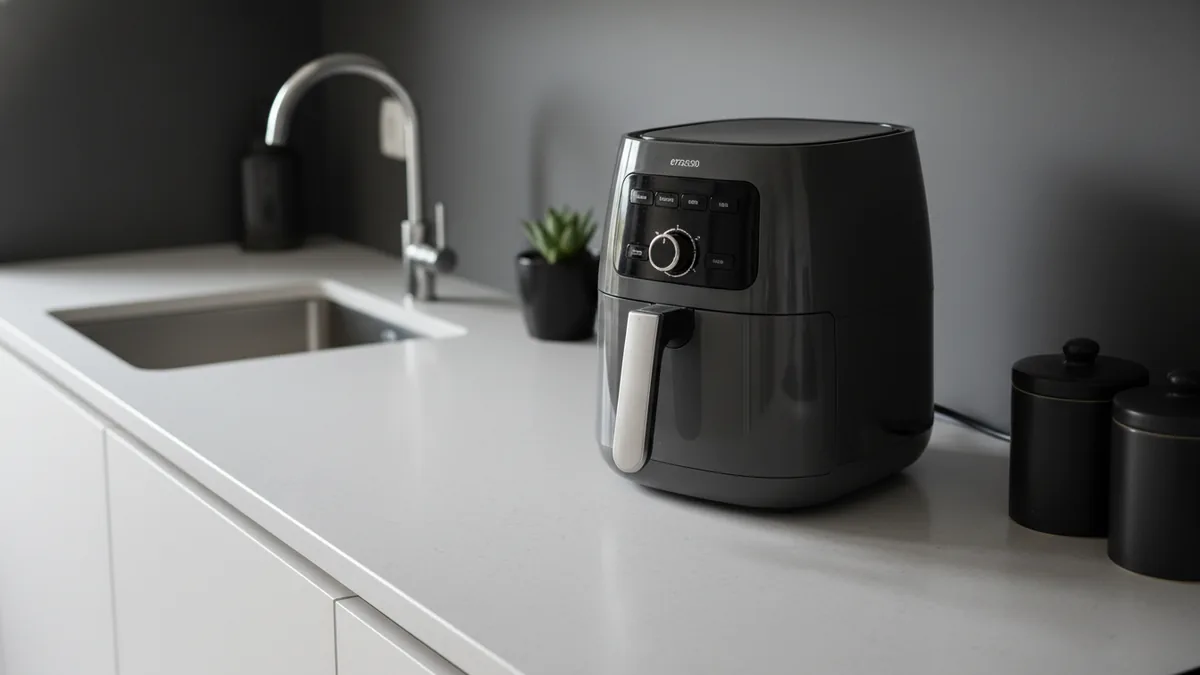
Space-Saving Tips
For many households, where to put air fryer in small kitchen is the daily challenge. The best space-saving kitchen tips focus on stability and clearance, not on cramming. A cramped setup often blocks airflow and makes it harder to remove food safely.
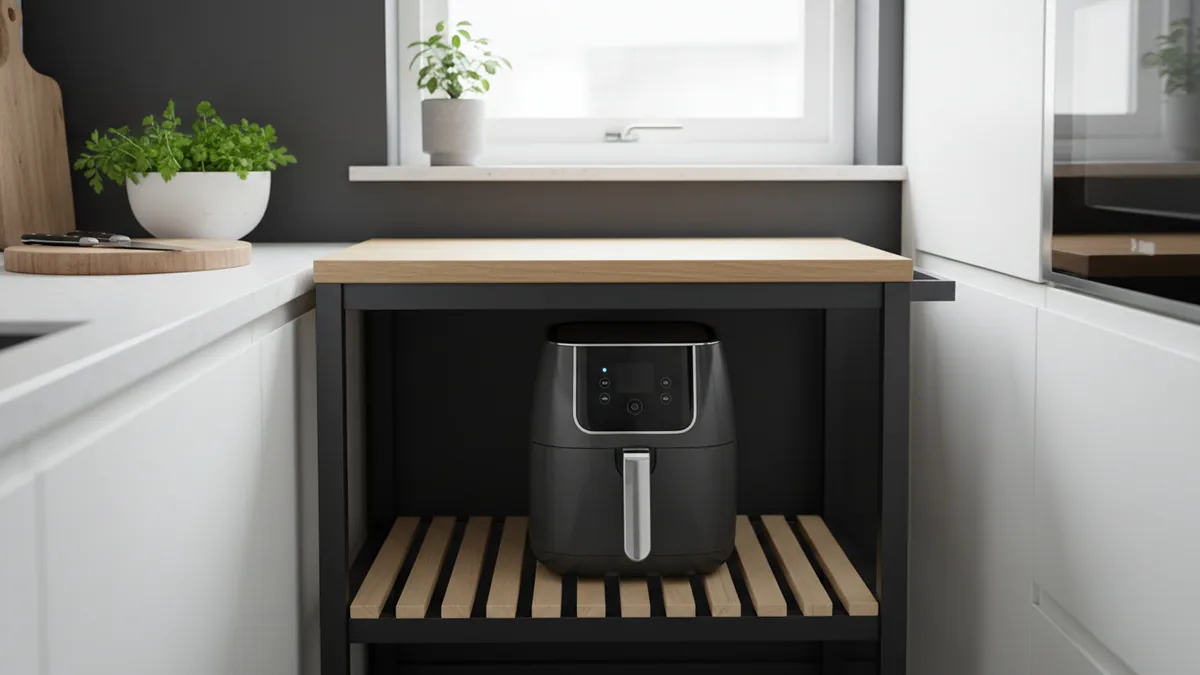
One smart option is an appliance cart. Choose a cart with heat-safe surfaces and shelves that keep the fryer off walls. You can roll it near the outlet and then return it after cooking. This also helps kitchen organization because you can store accessories in a drawer or basket.
If you prefer cabinets, use storage solutions that keep the unit out of the cabinet while running. A “closed cabinet” spot is usually a bad fit because it traps heat and blocks ventilation in kitchen use. Instead, store the fryer in a nearby cabinet and place it on the counter only while cooking.
- Use a cart for the fryer base and keep a clear counter landing spot.
- Store cookbooks, trays, and tongs in a nearby drawer for quick loading.
- Use a dedicated outlet strip with a grounded plug, not an extension cord.
Kitchen Layout Considerations
To choose where to place air fryer in kitchen based on layout, start with accessibility. Place it where you can open the drawer fully without hitting cabinets or the fridge door. If you use a stand-alone countertop, leave enough room for your hands and a heat-safe plate.
Proximity to other appliances matters for workflow. Put the air fryer close to a cutting board area and a plating spot. Many people also prefer it near the microwave because that is where they reheat sides. Just keep clear space so the microwave does not trap heat or restrict the fryer’s vents.
Also think about “door swings.” If your cabinet doors swing into the counter, the air fryer should not sit where the door will hit the drawer handle. This is a common issue when people ask air fryer placement tips for tight layouts.
Finally, keep the air fryer away from walls to prevent overheating. A tight corner can reduce airflow and increase wall heat. Make sure the sides and back have room for hot air to escape and cooler air to enter.
| Placement factor | What to aim for |
|---|---|
| Access while cooking | Drawer opens fully without bumping cabinets |
| Heat management | Leave space from walls and nearby surfaces |
| Workflow | Near prep and plating zones, not across the room |
| Safe cord routing | Outlet nearby, cord not in walk paths |
Airflow and Ventilation Issues
Air fryers rely on strong internal airflow to cook food evenly. Poor ventilation in kitchen setups can lead to longer cook times, uneven browning, and more heat buildup around the appliance. That is why placement should include clearance around intake and exhaust areas.
So what is a kitchen air gap? In practice, it is the empty space around your appliance that lets air move freely. It is not an accessory you buy in most cases. It is the real-world distance between the fryer and nearby walls, cabinets, or appliance fronts. More gap helps hot air exit and reduces recirculation.
In tight kitchens, you might be tempted to push the unit right up against a wall. Try to avoid that. If your fryer has an exhaust on the back or side, blocking it can turn the space around it into a heat pocket. Keep the vents clear and do not place items on top of the fryer during use.
- Do not place the fryer under low cabinets that can trap exhaust heat.
- Keep nearby appliances from covering vent sides.
- Leave a gap behind and around the unit for air circulation.
One more question people ask: can you put furniture in front of air intake? For air fryers, the same rule applies. Do not block intake or exhaust with furniture, cabinet doors, or storage bins. During cooking, the fryer needs open air around its vents.
Alternative Storage Solutions
When counter space is scarce, the goal is to store the fryer safely and bring it out only when needed. Using appliance storage solutions like carts, roll-out shelves, or open shelving can keep daily workflow smooth. Choose storage that keeps the unit away from water splashes and heat-prone areas.
Roll-out shelving is great when you have limited counter area. Store the fryer so it sits on a heat-safe surface and can be pulled out to cooking position. Then, you can open and access it without carrying it far. This reduces the risk of bumping hot baskets while moving.
If you are considering unconventional locations, keep it practical. Can i use an air fryer in my bedroom? In most cases, no. Air fryers produce heat and need airflow. They also create a cooking mess risk, and bedrooms are not designed for kitchen appliance safety.
For best results, pick one “home base” spot for storage and one “use spot” for cooking. Use the same pattern every time so you do not forget clearances.
- Store on a cart or in an upper shelf that stays dry.
- Move to the counter only during cooking for clear airflow.
- Keep cooking areas separate from living spaces to reduce fire risk.
Frequently asked questions
- Where to place an air fryer in the kitchen for best results?
- Put it on a stable, heat-resistant counter in your cooking zone. Leave space around vents so hot air can move freely.
- How much clearance do I need for air fryer ventilation?
- Keep the unit away from walls and nearby appliances. Aim for an empty air gap around intake and exhaust areas.
- Do air fryers heat up the kitchen?
- Yes, they add heat to the surrounding area. Proper clearance helps reduce warming of cabinets and walls.
- Where to put an air fryer in a small kitchen?
- Use a cart or a dedicated counter area you can clear easily. Store it in cabinets between uses so airflow stays unobstructed.
- Can I use an air fryer in my bedroom?
- It is not recommended. Air fryers generate heat and splatter risk, and bedrooms are not set up for kitchen appliance safety.
- Can you put furniture in front of air intake or exhaust on an air fryer?
- No. Blocking intake or exhaust can cause overheating and uneven cooking. Keep nearby surfaces clear during use.
Related reading
Couch Placement — Comfort, Flow, and Style
Arrange couches for easy movement, good conversation, and a balanced room.
Small Kitchen Design — Light, Space and Smart Storage
Use light, smart storage, and slim furnishings to make a small kitchen feel more open.
Living Room Paint — Measurements and Buying Tips
Measure your walls, count coats, and buy the right amount of living room paint.