Piano Room Decor — Style, Sound and Everyday Use
Make your piano room feel calm, useful, and beautifully connected to the rest of your home.
Choose a Theme That Fits Your Home
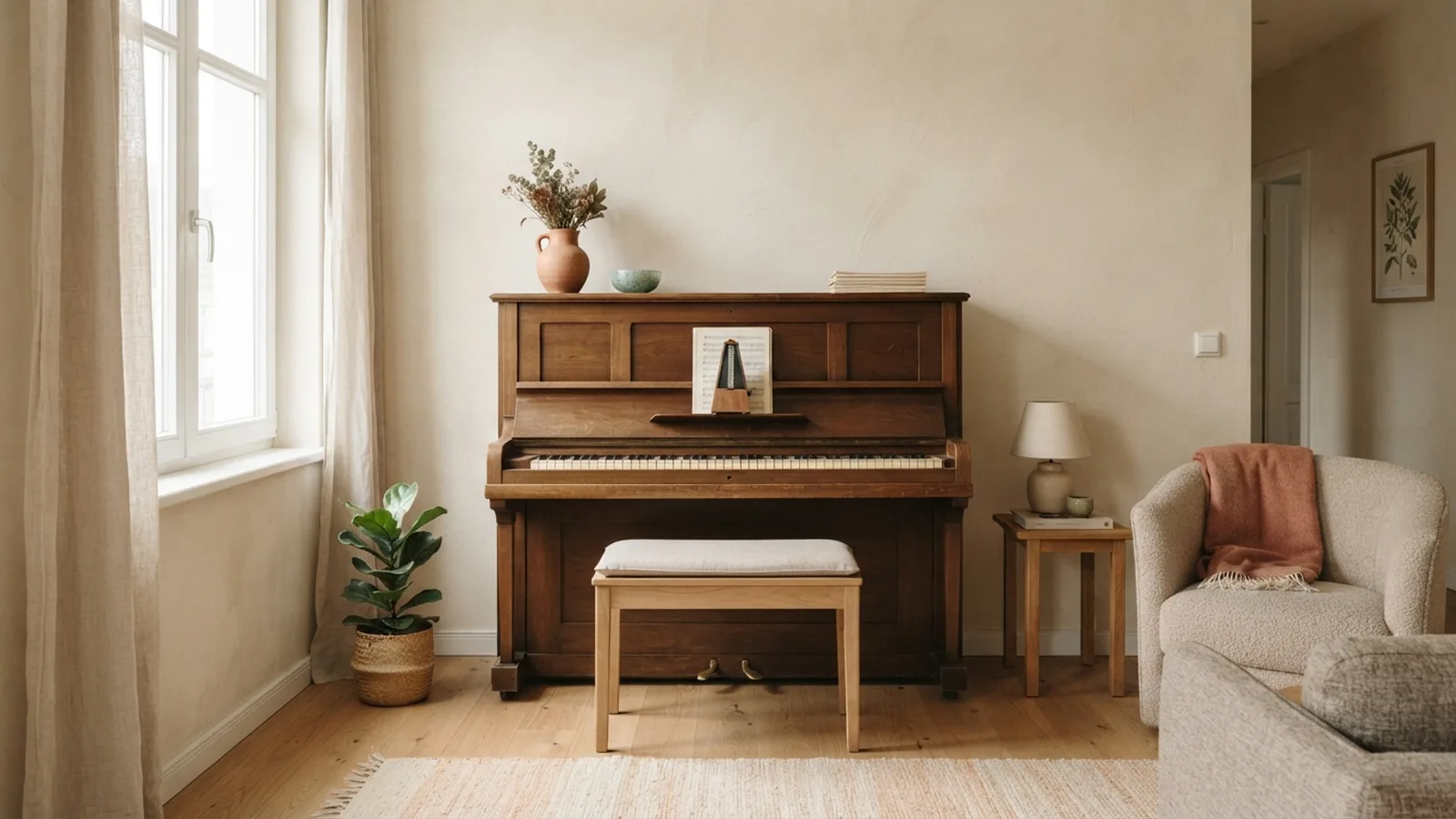
A piano can dominate a room, so make it the focal point rather than an afterthought. To decorate a piano room, begin with the mood you want: calm and spare, warm and personal, or rich with musical touches. Then choose furniture and decor that support that mood without competing with the instrument.
A musical theme can feel subtle. Frame a favorite score, display a few records, or add a small music stand beside the piano. For a more personal look, use family photos or art that reflects the player’s interests. Nature-inspired decor works well too, with wood, linen, and a few leafy plants.
Keep the theme consistent across the room. A Japandi space might pair a pale oak bench with simple ceramics and quiet wall art. A coastal room could use woven textures and soft sand tones. The piano still leads; the theme helps the rest of the room feel connected.
- Pick one main style and two or three supporting materials.
- Choose one or two personal objects, not a full shelf of keepsakes.
- Leave clear space around the piano so it remains easy to use.
Build a Color Palette Around the Piano
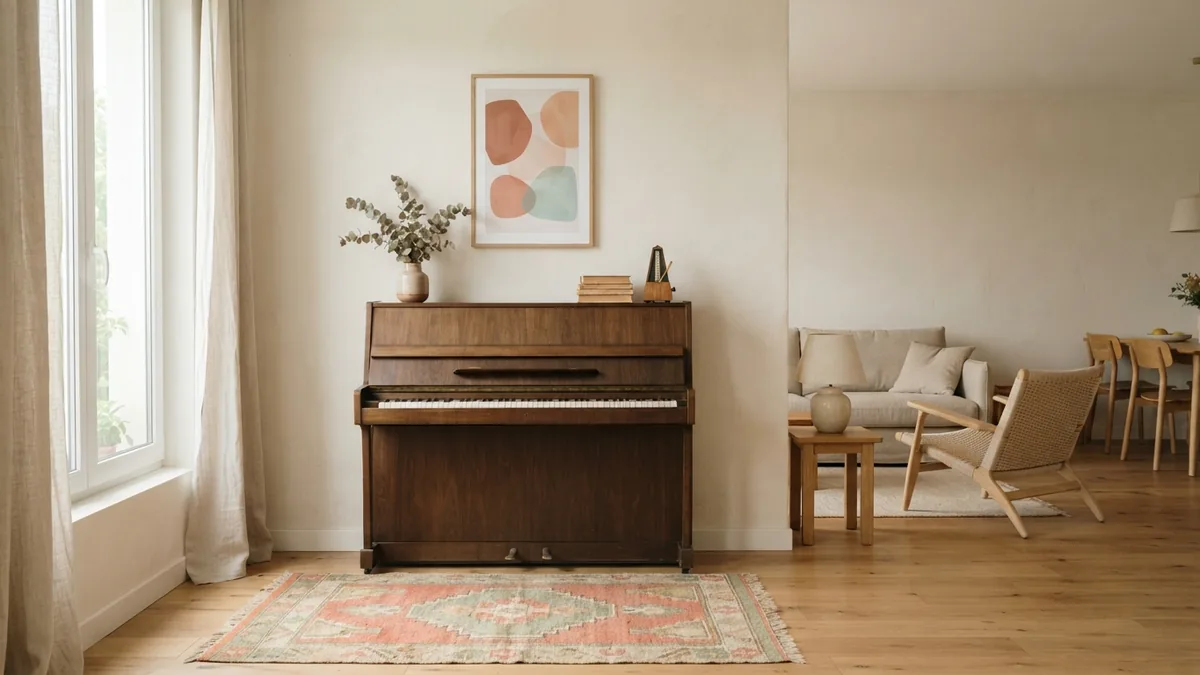
Start with the piano’s finish and the room’s largest surfaces. A black piano stands out against warm white, pale plaster, or light oak. A brown wood piano pairs naturally with cream, oat, sage, and muted terracotta. With a white piano, add depth through natural wood and soft, warm fabrics.
Limit the palette to a few repeating colors. Use one shade for larger pieces, such as a rug or curtains, and another for small accents. This makes the piano feel settled in the room instead of set apart from it. Repeat a color in two or three places for a calm, joined-up look.
Look at the room in daylight before choosing paint or fabric. A color can seem cooler or darker beside the piano than it does on a small sample. Bring home fabric swatches and view them near the instrument at different times of day. Matte finishes often suit a quiet, lived-in space better than glossy ones.
Use contrast with care. A pale wall can frame a dark piano, while a soft rug can link it to nearby seating. Avoid placing several bold patterns around the instrument. A focused palette makes the whole room feel easier on the eye.
Refresh the Piano Area with Seasonal Decor
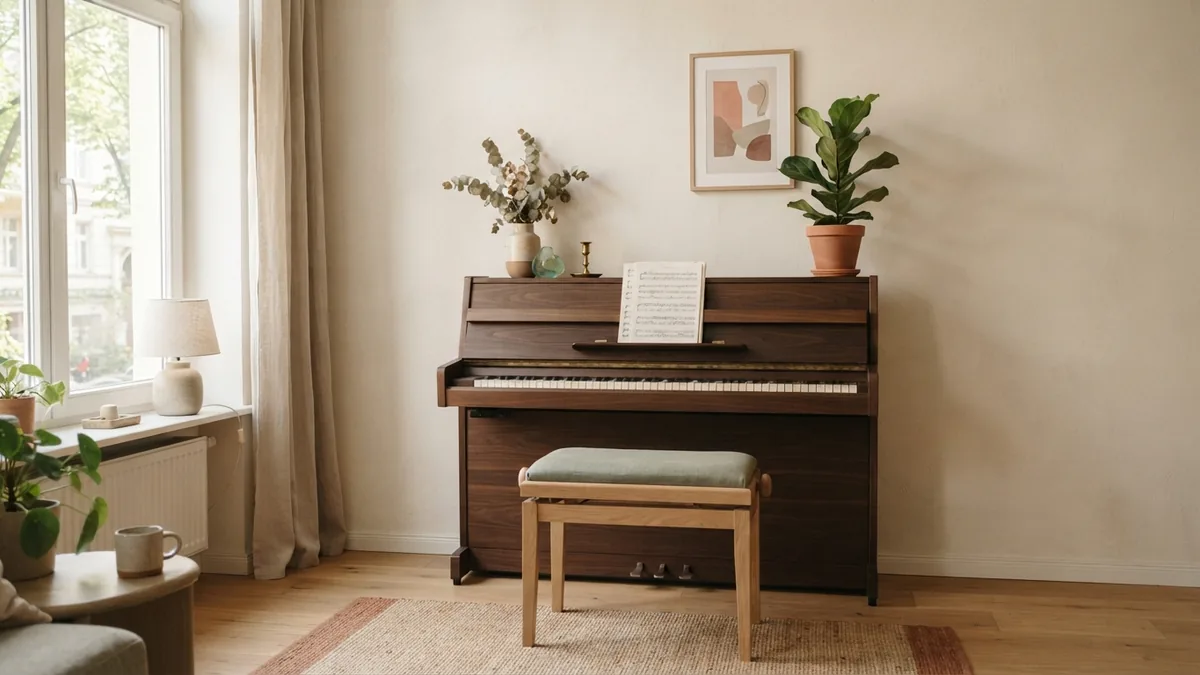
Seasonal decorations can make the piano corner feel fresh without changing the room each month. Keep a small tray or shelf nearby for items that are easy to swap. In spring, try a ceramic vase with a few branches. In autumn, use a warm-toned cushion or a bowl of dried seed pods.
Use the piano top with care. Keep decor light, stable, and away from the keys, music rack, and moving parts. A single low arrangement is safer than a row of objects. Do not set drinks, damp plants, or anything that could spill on the instrument.
Choose seasonal pieces that fit the room’s color scheme. A linen runner or small ceramic vessel can add warmth without hiding the piano’s shape. Store spare decor in a nearby basket or cupboard. A simple swap keeps the area engaging while leaving the instrument ready for practice.
Create a Room That Feels Musical
A musical atmosphere comes from use, not just display. Keep sheet music in a closed cabinet or a neat file near the piano. Place a lamp where it lights the music without shining into the player’s eyes. A comfortable bench matters more than extra ornaments.
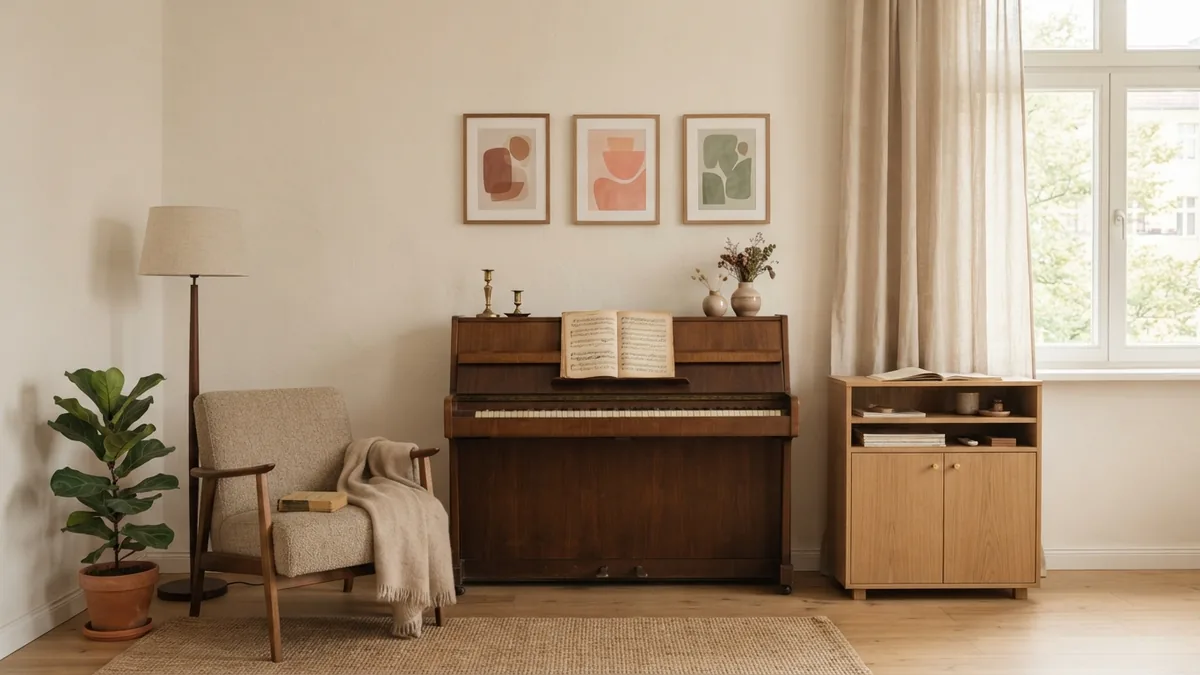
Give the piano a clear backdrop. A gallery wall can work if the frames sit well above the instrument and follow a simple layout. Choose art with calm colors and varied sizes, then leave breathing room around each piece. For a minimalist design, one large artwork may be enough.
Think about sound as well as looks. A rug and fabric curtains can soften a room with hard floors and bare walls. Too many soft surfaces may make the sound feel dull, so adjust in small steps. Listen from the main seating area and change the room only when the sound feels too sharp or too muted.
Make Space for Practice and Daily Life
The room should support practice without turning into a storage zone. Keep the route to the keyboard clear, and leave enough room to sit and move the bench. A small shelf or cabinet can hold music, pencils, and a metronome. Put everyday items away after practice to keep the area calm.
If the piano shares a living room, let nearby furniture support its use. Place a reading chair at an angle where it does not block the keyboard or walkway. A compact side table can hold a drink away from the piano. Choose storage with doors if open shelves tend to collect clutter.
Measure before buying a rug, bench, lamp, or cabinet. Mark the planned footprint on the floor with paper or removable tape. Check that doors open fully and that people can pass without brushing the piano. A little planning prevents a beautiful corner from becoming awkward to use.
- Keep a clear path to the piano and around the bench.
- Store music and small tools in one easy-to-reach place.
- Use a lamp with a steady base and a safe cord route.
Add Plants and Natural Materials with Care
Plants bring life to a piano room, but the spot matters. Choose hardy, low-maintenance plants such as a snake plant or pothos, and set them well away from the instrument. Avoid placing pots on the piano. Water spills and damp soil can harm its finish.
Keep plants out of direct sun and away from heat vents. Strong sun can fade finishes, while quick changes in heat and moisture may affect the instrument. Use a stable pot with a saucer, and water it elsewhere if the room has little space. A small plant on a side table often gives enough color.
Natural materials can carry the same warm feel with less upkeep. Add a woven basket for sheet music, a linen cushion on the bench, or a pale wood stool nearby. Use a few textures rather than many. The piano should stay easy to reach and easy to clean.
Place the Piano for Good Sound and Easy Use
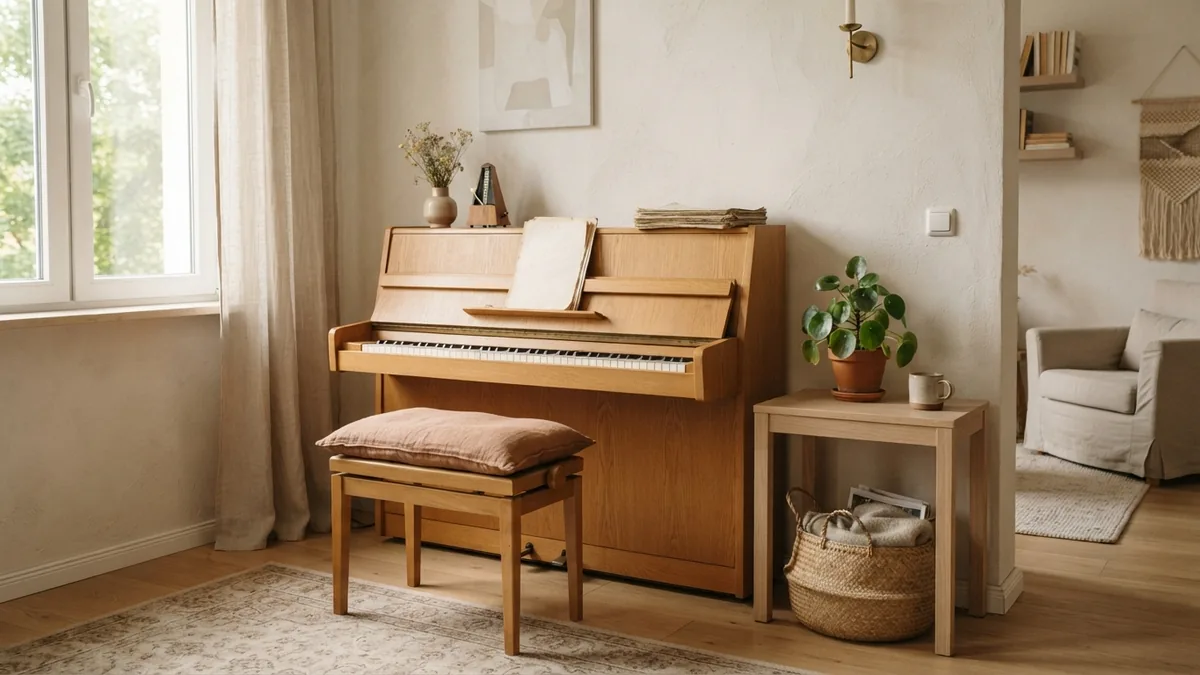
Where to put a piano in a living room depends on the instrument, the room, and its heat and light sources. Start with a spot away from direct sun, radiators, fireplaces, and exterior doors. These can bring sharp changes in temperature or moisture. Check the maker’s care notes for the right conditions.
For an upright piano, an interior wall is often a useful starting point. Leave some space behind it so sound can move into the room, while following the maker’s spacing advice. A grand piano needs room for its lid and for people to pass around it. Avoid squeezing it into a corner if that blocks the sound or the room’s main path.
To work out how to place a piano in a living room, mark out its size before moving it. Test the spot from the player’s seat and from the main listening area. Keep it clear of vents and windows, and make sure the bench can move freely. A piano tuner or mover can advise on tricky rooms and heavy instruments.
Sound changes with the room’s shape and surfaces. If the piano sounds harsh, try adding a rug or curtains before moving it again. If it sounds muffled, reduce soft items nearby. For the best balance, listen in more than one spot and make small changes at a time.
Bring the Look Together
When deciding how to incorporate a piano into a living room, treat it as both a useful instrument and a key piece of furniture. Choose a theme, repeat a small set of colors, and leave space for practice. Add personal details in measured amounts, so the piano remains the room’s main focus.
Take a final look at sight lines, storage, and daily movement. Can someone sit down without moving several objects? Is the music easy to reach? Does the piano feel connected to the seating and artwork? Small changes to lighting, placement, or clutter can make the whole room work better.
Frequently asked questions
- Where should I put a piano in a living room?
- Start with an interior wall away from direct sun, heat vents, and fireplaces. Leave space for the bench and keep the main walkway clear.
- How do I decorate a room with a piano?
- Choose a theme and a small color palette that work with the piano’s finish. Add useful lighting, neat music storage, and a few personal accents.
- Can I put plants near a piano?
- Yes, but keep plants off the piano and away from direct sun or heat vents. Use a stable pot and prevent water or damp soil from reaching the instrument.
- What colors work well with a black piano?
- Warm white, cream, pale oak, and muted sage can soften the contrast around a black piano. Repeat the chosen colors in a rug, curtains, or small accents.
- How much space should I leave around a piano?
- Leave enough room to use the bench, open doors, and walk past without brushing the instrument. Check the maker’s advice for clearance behind the piano.
Related reading
Room Squaring — Set the Floor Lines Right
Set accurate floor lines before you start laying planks or boards.
Interior Designer Qualifications — Education, Skills and Career Paths
Explore the education, skills, experience, and state rules needed for an interior design career.
Wood Flooring Direction — Light, Space, and Flow
Choose board direction with light, room shape, and nearby spaces in mind.