Minimalist Interior Design — Calm Rooms That Work
Create a calm, useful home with less clutter and more purpose.
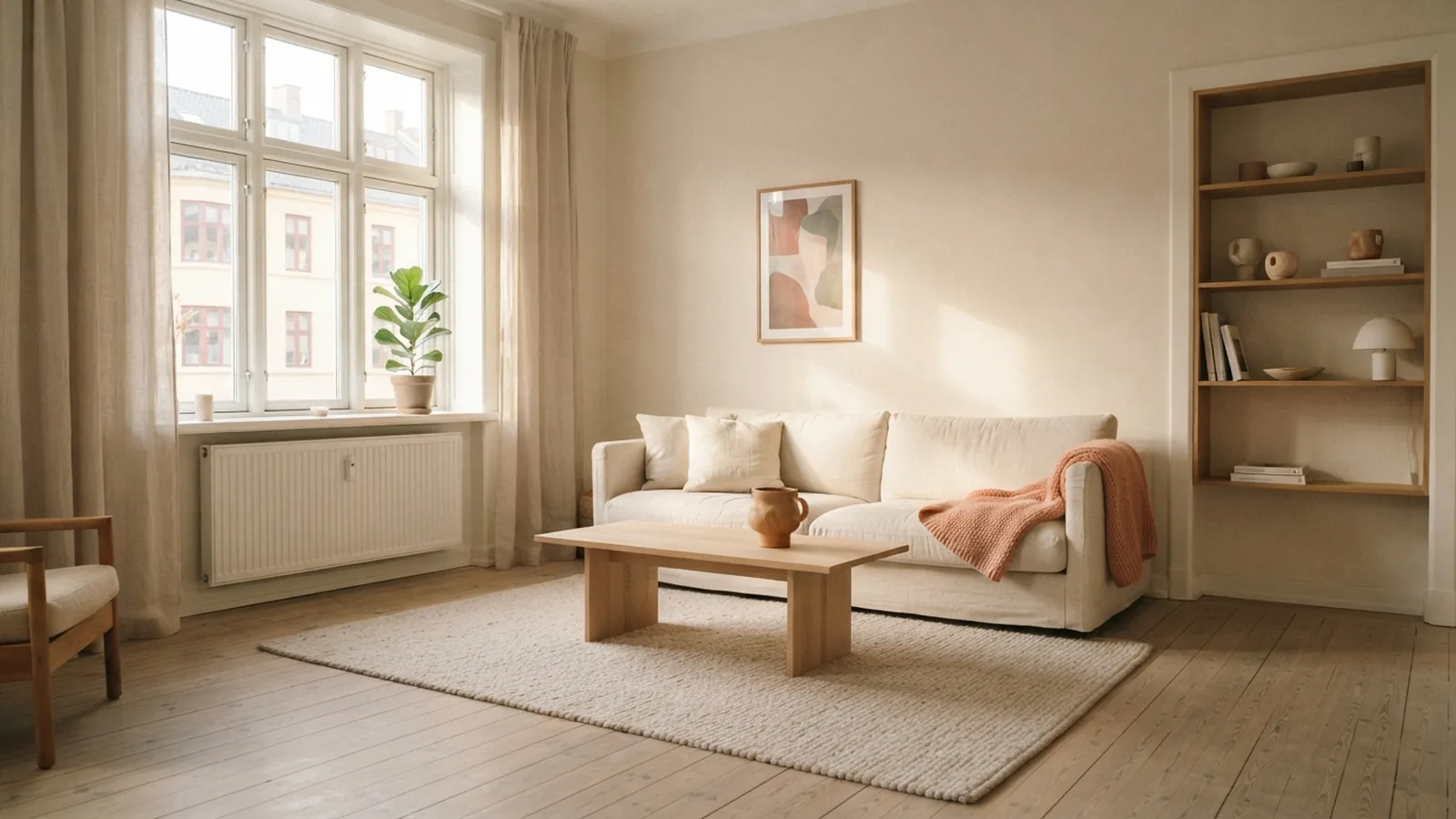
What Is Minimalist Interior Design?
Minimalist interior design uses less to create rooms that feel calm, useful, and open. It puts function first. Each item earns its place through use, beauty, or both.
The core idea is “less is more.” This does not mean living in a bare white box. It means removing excess so key pieces can stand out. A sofa, lamp, or table should support daily life without crowding the room.
Minimalist design also values empty space. Clear areas help the eye rest. They can make a small apartment feel larger and a busy home feel more calm.
- Keep items that serve a clear purpose.
- Choose simple forms over fussy detail.
- Leave room around key furniture pieces.
- Use texture and light instead of extra decor.
The Main Traits of a Minimalist Home
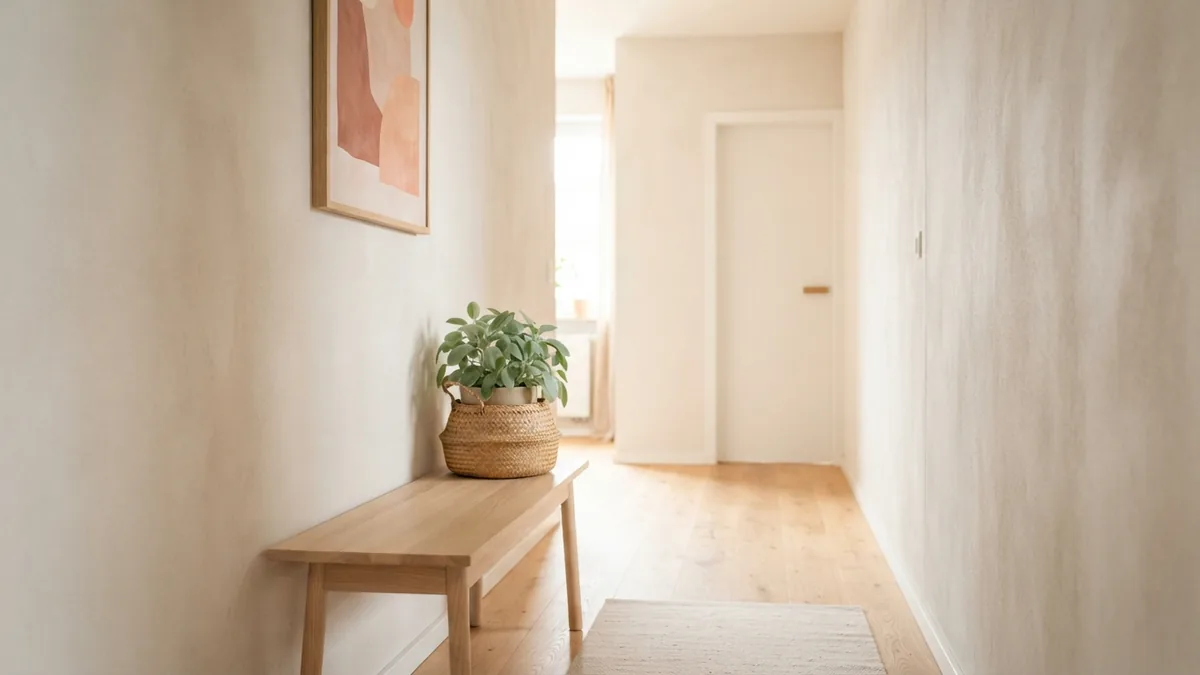
Clean lines shape most minimalist rooms. You may see flat cabinet fronts, simple shelves, and furniture with slim legs. Curves can work too. They should feel smooth and planned rather than ornate.
An uncluttered space is another key trait. Surfaces hold only a few useful or loved items. The room still feels lived in, but nothing competes for attention.
Minimalism also follows a strong visual order. Furniture often sits in clear zones for rest, work, or dining. This layout helps an open floor plan feel calm instead of scattered.
Minimal accessories support the same goal. One large ceramic vase may have more impact than six small ornaments. A single plant can add life without adding visual noise.
Minimalism is not the same as emptiness
A good minimalist room has warmth and character. It can include art, plants, family pieces, and soft fabrics. The difference lies in choice and balance.
Ask what each object adds. Keep items that bring joy or serve daily needs. Store, donate, or recycle items that only fill space.
Color Palettes That Keep Rooms Light
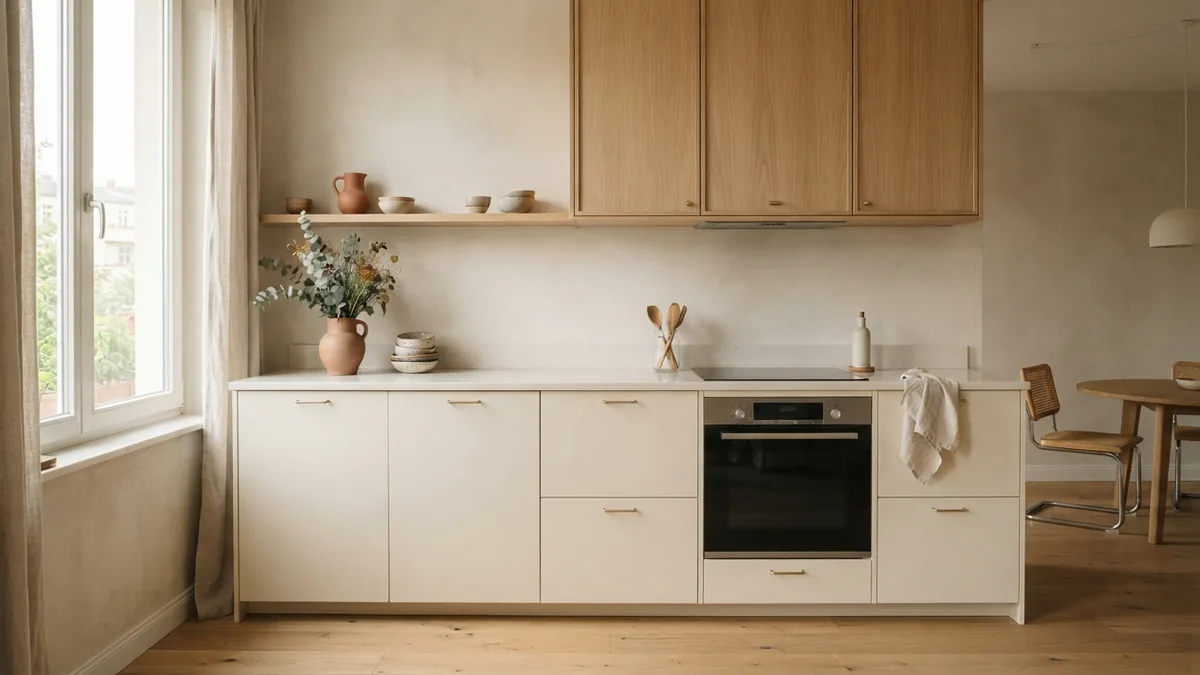
Minimalist color schemes often start with white, gray, cream, beige, or soft taupe. These neutral colors create a quiet base. They also help daylight move through the room.
A monochromatic scheme uses several shades of one color. For example, combine warm white walls with oat curtains and beige seating. Small shifts in tone stop the room from looking flat.
Warm neutrals often suit real homes better than stark white. Cream walls and pale oak can feel soft and welcoming. They also pair well with linen, clay, and natural stone.
Muted color can add focus without breaking the calm mood. Try soft sage, dusty terracotta, or warm peach on one cushion or ceramic piece. Keep bright colors rare and well placed.
| Room element | Simple color choice | Why it works |
|---|---|---|
| Walls | Warm white or pale plaster | Reflects light without a cold cast |
| Large furniture | Oat, beige, or soft gray | Keeps the main shape quiet |
| Wood | Pale oak or light ash | Adds warmth and grain |
| Accents | Sage, terracotta, or peach | Brings gentle contrast |
Furniture With Purpose and Clean Form
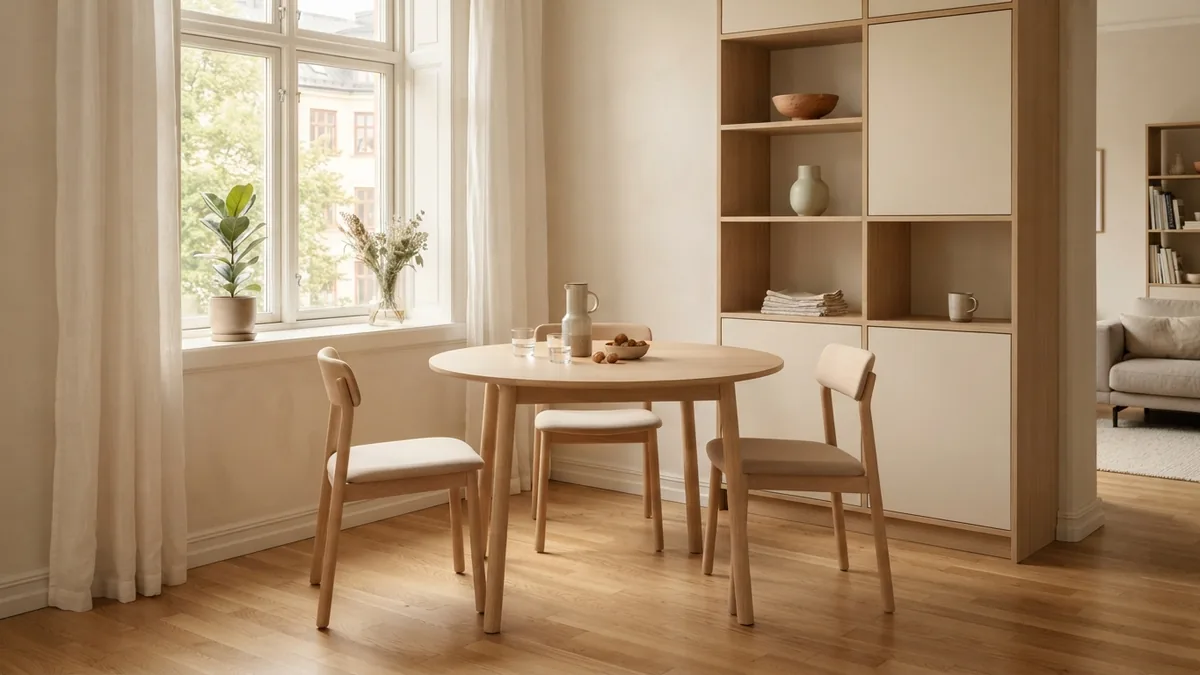
Choose furniture for how it works first. Then judge its shape, scale, and finish. A useful piece can still become a strong design feature.
Look for clean lines and a small visual footprint. A raised sofa can show more floor. A slim table can keep a narrow room from feeling blocked.
Multi-functional design helps smaller homes. Pick a bed with drawers, a bench with hidden storage, or a nesting table set. These pieces reduce the need for extra furniture.
Good scale matters as much as good style. Measure the room before you buy. Leave about 75 centimeters for main walkways when possible. Smaller paths may work in tight rooms, but doors must open with ease.
Where to buy minimalist furniture
You can find minimalist furniture at local makers, vintage shops, and trusted online stores. Focus on build quality rather than a label. Solid wood, firm joints, and repairable parts often give better long-term value.
Check the full size, delivery terms, and return rules before ordering. Read care notes for fabric and wood. A simple piece should fit your room and your habits, not just a product photo.
- Measure the room, doors, lifts, and stair turns.
- Check seat height and storage depth.
- Choose finishes that suit your daily cleaning routine.
- Buy fewer pieces with stronger use value.
How to Create a Minimalist Room
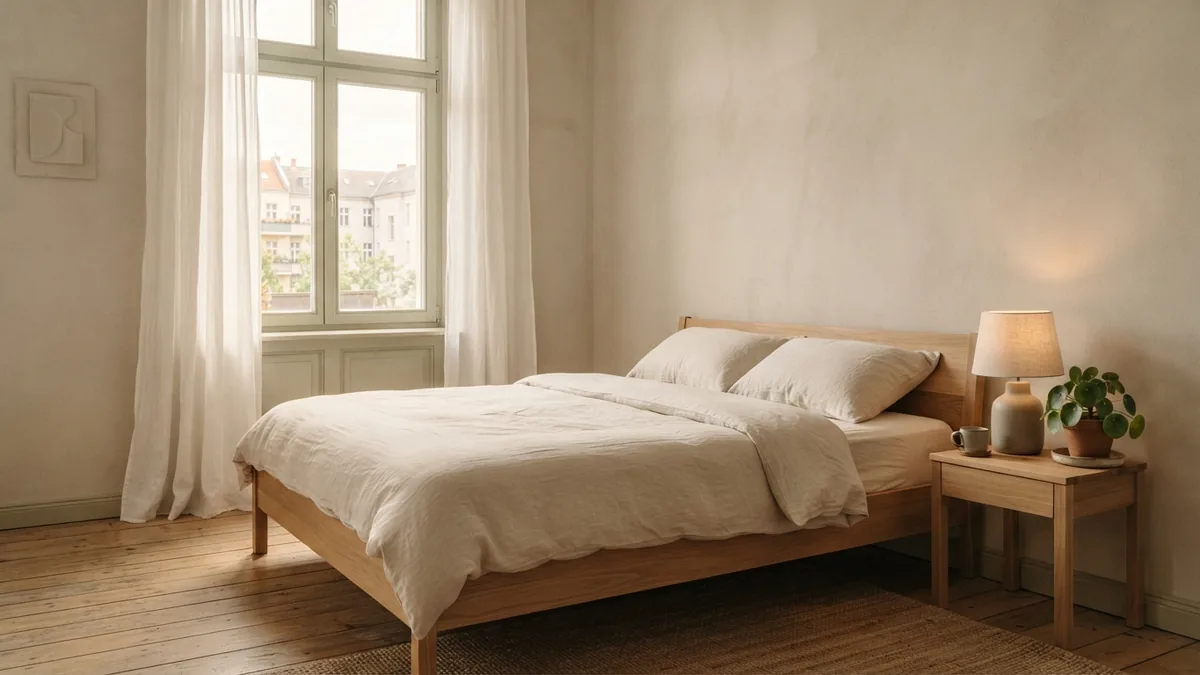
Start with decluttering, not shopping. If you add storage before removing excess, the room may stay crowded. Set aside one afternoon for a small room.
Take every item out of one zone. Group similar things together. This makes repeats and forgotten items easy to spot.
- Set three groups. Use keep, move, and let go. Be honest about what you use.
- Clear one surface. Start with a desk, shelf, or bedside table.
- Store useful items nearby. Give daily items a fixed home.
- Keep a small display. Choose two or three objects with meaning.
- Review the room. Remove one more item if the space still feels busy.
This method answers how to declutter your room in a minimalist way. It also avoids a rushed purge. Keep useful items that you cannot replace with ease.
For a bedroom, begin with the floor, bedside tables, and wardrobe. Keep sleep-related items close. Move work gear and laundry tools elsewhere when you can.
How to have a minimalist bedroom
Use the bed as the room’s main anchor. Keep its shape simple and its bedding calm. Two pillows and one folded throw may be enough.
Hide visual noise in closed storage. Keep one clear route from the door to the bed. This makes the room feel restful without making it feel empty.
Texture and Soft Elements Add Warmth
Texture keeps minimalist design from feeling cold. It adds depth without adding many objects. Mix matte plaster, pale wood, linen, cotton, ceramic, and brushed metal.
Layer texture through useful items. Try linen curtains, a cotton rug, and a wool throw. Keep their colors close so the room stays calm.
Natural materials work well because each surface has a small change in tone. Wood grain, woven fabric, and handmade ceramic create quiet interest. They also age with more charm than many glossy finishes.
Soft elements should support the room’s use. Choose washable covers in a busy living room. In a bedroom, pick bedding that feels good against the skin.
Plants can add shape, color, and life. Choose one or two plants that suit the room’s light. Use simple pots in clay, cream, or pale stone.
Finish with a slow edit. Sit in the room at different times of day. Remove anything that blocks movement or pulls too much focus.
Frequently asked questions
- What is minimalist interior design?
- Minimalist interior design creates calm rooms with fewer, better-chosen items. It uses function, clean lines, open space, and quiet colors.
- What is minimalist decor?
- Minimalist decor uses a small number of useful or meaningful pieces. Common choices include simple ceramics, plants, soft fabrics, and natural wood.
- How do you declutter a room in a minimalist way?
- Work on one zone at a time. Sort items into keep, move, and let go groups, then give useful items a fixed home.
- How can I have a minimalist room?
- Start by clearing surfaces and walkways. Choose useful furniture, limit display items, and keep colors and materials simple.
- How do I get a minimalist bedroom?
- Make the bed the main anchor, clear the floor, and hide visual noise in storage. Use calm bedding and keep work items outside the room when possible.
- Where can I buy minimalist furniture?
- Look at local makers, vintage shops, and trusted online stores. Check measurements, materials, care needs, delivery terms, and return rules before buying.
Related reading
Living Room Curtains — Color, Fabric and Fit
Choose curtains that suit your light, style, colors and windows.
Piano Room Decor — Style, Sound and Everyday Use
Make your piano room feel calm, useful, and beautifully connected to the rest of your home.
Room Squaring — Set the Floor Lines Right
Set accurate floor lines before you start laying planks or boards.