Kitchen Cabinet Color — Choices That Suit Your Home
Choose cabinet colors that work with your finishes, daylight, and style.
Understanding Kitchen Cabinet Colors
To learn how to choose kitchen cabinet color, start with the parts of your kitchen that will stay. Look at the counters, backsplash, floor, and wall paint together. Cabinet color should connect these surfaces, not compete with them.
Undertones can make similar colors look very different. A warm white may suit cream stone and oak. A cool white can look sharp beside the same materials. Place paint samples beside your actual finishes before making a choice.
Cabinets cover a large area, so small color shifts can change the whole room. Compare two or three shades at once. Check them from across the kitchen, as well as up close. That simple test often rules out a color that looked right on a screen.
- Pair warm cabinet shades with golden or red-toned floors.
- Try cooler shades with gray tile or cool stone.
- Repeat one cabinet color in a small kitchen accent.
Good kitchen cabinet color ideas begin with your own finishes. Trends can help you explore, but your room sets the limits.
Check Light, Room Size, and Daily Use
Daylight shifts the look of paint over the course of a day. North-facing rooms often get cooler light. South-facing rooms tend to feel warmer and brighter. Check each sample in the morning, at midday, and at night.
Paint large sample boards instead of relying on tiny chips. Move them near the counter, floor, and backsplash. Give each board a full day in the room. This helps you see how the color changes as the light shifts.
Room size can guide your choice, but it should not set a strict rule. Pale cabinets may make a small kitchen feel open. Dark shades can add depth and a strong focal point. In a dim room, test a soft mid-tone before choosing a very dark color.
Think about daily wear, too. Very dark and very pale paint can show marks. Mid-tones may hide small smudges more easily. Your cooking habits and cleaning routine matter as much as room size.
Trust the sample, not the trend photo. It just works.
Popular Kitchen Cabinet Colors to Consider
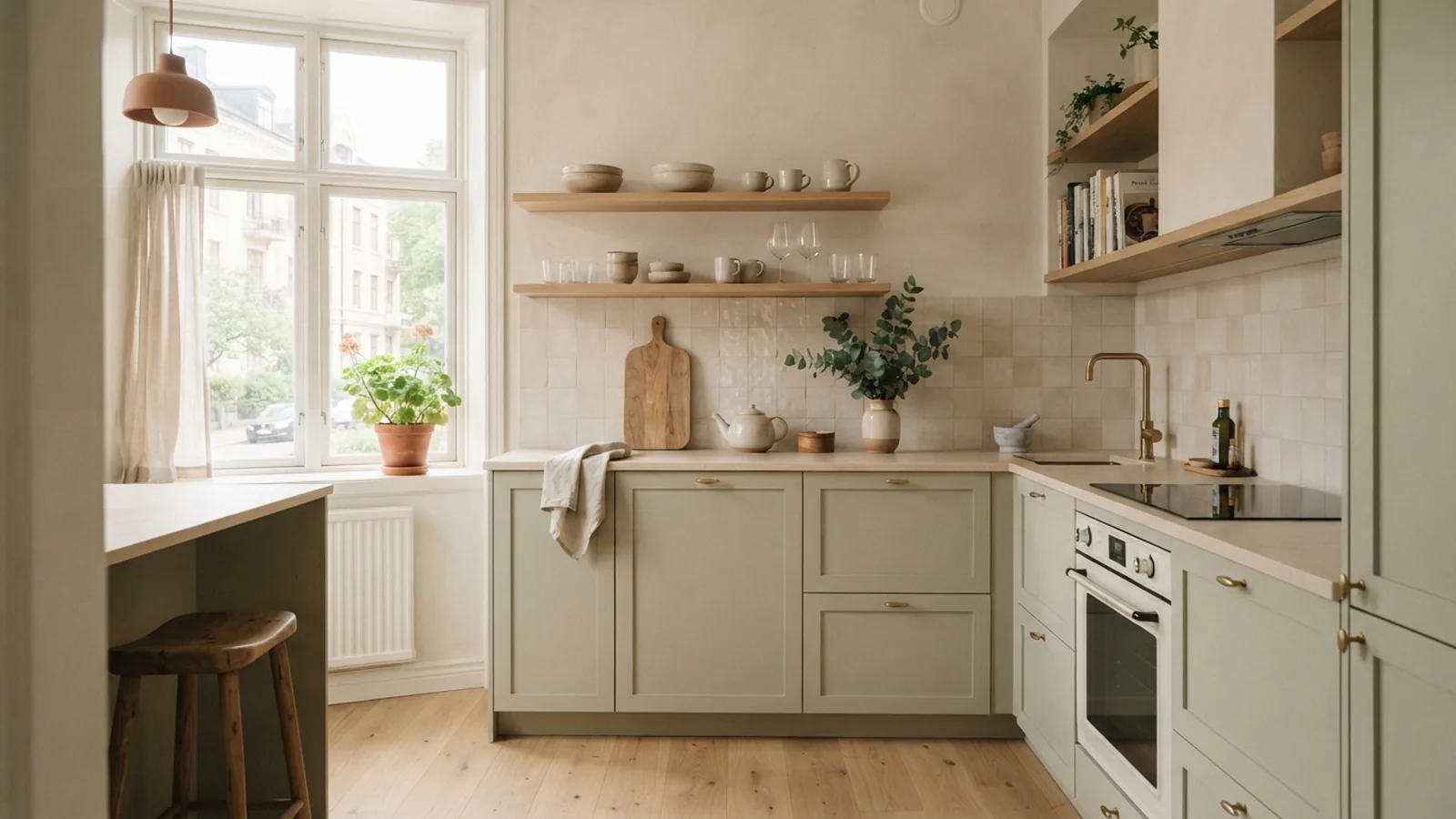
Soft greens, warm neutrals, and bold blues remain popular kitchen cabinet colors. Sage can sit well with pale oak, cream stone, and warm metal. Deeper olive gives a room more weight. Try a muted green if plain white feels too stark.
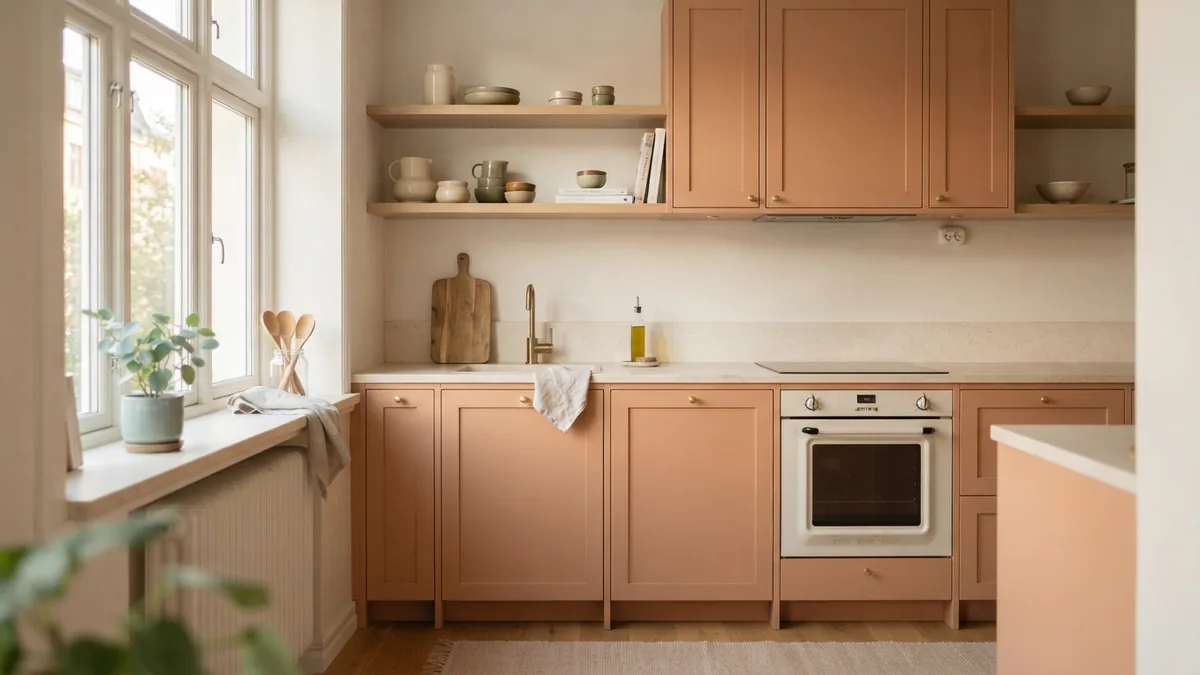
Warm neutrals include mushroom, oatmeal, putty, and creamy white. These shades work with wood and many stone patterns. Check each sample for pink or yellow undertones. One neutral can look quite different beside another.
Bold blues bring contrast to both classic and modern kitchens. Navy can ground an island or lower cabinets. Dusty blue feels gentler across a larger area. Balance a strong color with quieter counters or walls.
Use inspiration from other kitchens as a starting point. Save rooms with similar light and finishes. Then note what appeals to you, such as warmth or contrast. Adapt the idea to your own home and taste.
- Soft green: Try sage with oak, cream, or natural stone.
- Warm neutral: Use putty for a subtle change from white.
- Bold blue: Add navy to an island or lower cabinets.
A color you enjoy matters more than a color that is simply in style.
Use Two-Tone Cabinets and Accents With Care
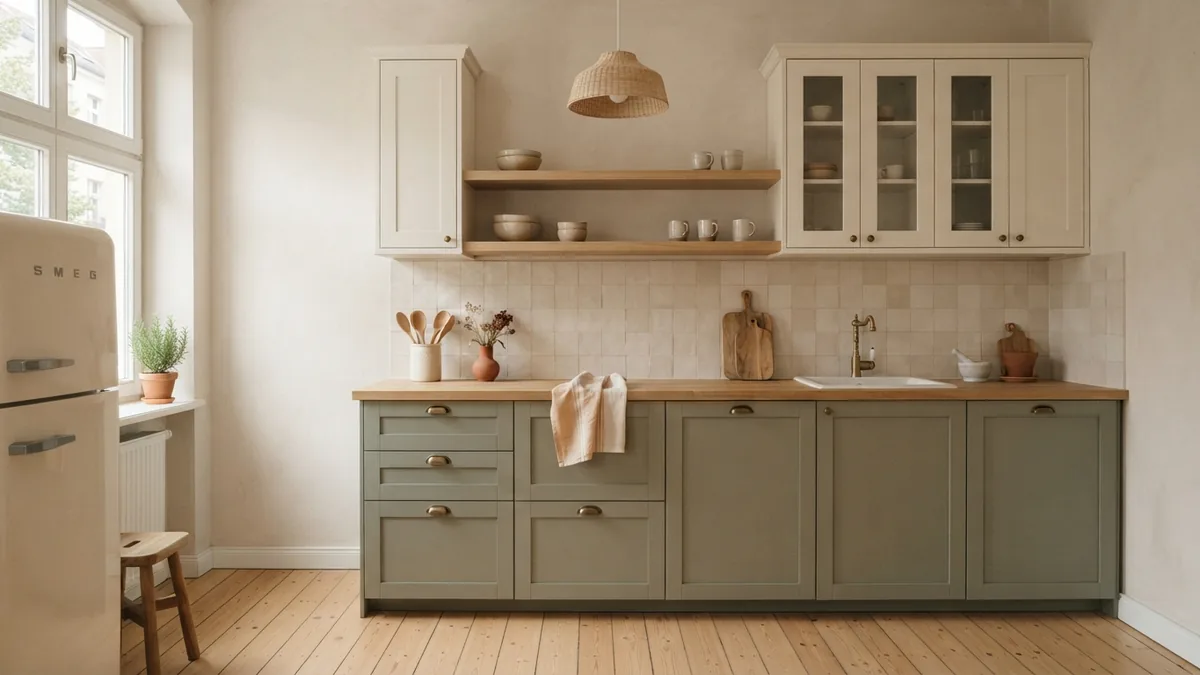
Two-tone kitchen cabinets add character by giving parts of the room distinct colors. A common pairing uses light upper cabinets and darker lower cabinets. Another option gives the island a different shade. Both can make a large room feel more layered.
Choose colors with a shared undertone or a clear link. Sage and cream feel soft together. Navy and warm white bring more contrast. If your counter has bold patterns, keep the cabinet colors quiet.
Let the room layout guide where each color goes. Dark lower cabinets can anchor a bright space. A colored island can draw the eye without covering every wall. In a narrow kitchen, limit contrast to one feature.
Hardware, stools, and small decor items can help the colors match. Repeat a metal finish or wood tone in a few places. Keep the accents useful and simple. The cabinets should stay the main focus.
A china cabinet in the living room can also suit an open-plan home. Choose a finish that relates to nearby kitchen cabinets or wood accents. The shared color helps both areas feel connected.
Two colors are enough for most kitchens. More can make the room feel busy.
Choose a Cabinet Finish and Hardware
Paint finish affects both the look and upkeep of your cabinets. Satin has a soft sheen and can suit a relaxed room. Semi-gloss reflects more light and is often easier to wipe. High gloss makes a bold, bright surface, but it can show marks and flaws.
Check samples of the paint finish, not just the color. A sheen can make a shade look brighter or stronger. Satin and semi-gloss are common choices for busy kitchens. Pick the finish that fits your cleaning needs and the cabinet surface.
Hardware should suit the room’s style and nearby finishes. To choose kitchen cabinet hardware to match decor, compare the metal with faucets, lights, and other fixtures. Brushed finishes feel quiet, while polished metal draws more notice. A small sample can help you judge the effect.
You can paint kitchen cabinet hinges, but first check whether they can be removed. Painted hinges may bind or chip as they move. For a lasting result, use paint made for metal and keep coats thin. Replacing worn hinges may be easier.
How to paint kitchen cabinet knobs and pulls starts with cleaning and light sanding. Remove each piece, then apply a metal primer and thin paint coats. Let the finish cure before putting the hardware back. The same steps can guide how to paint kitchen cabinet hinges, though moving parts need extra care.
Plan Cabinet Painting and Small Repairs
How to paint kitchen cabinets starts with sound prep. Remove doors and hardware, clean away grease, and label each part. Sand glossy areas lightly, then use a primer suited to the surface. Apply thin coats and allow them to dry as directed.
For how to touch up kitchen cabinet paint, first clean the spot and let it dry. Use the same paint and sheen, if you have them. Dab on a small amount with a fine brush. A large patch may need sanding and a fresh coat across the whole door.
How much is kitchen cabinet painting? The price depends on kitchen size, cabinet condition, prep work, and local labor rates. Ask for a written quote that lists sanding, primer, paint, repairs, and door removal. Compare the same tasks in each quote.
To find a kitchen cabinet painter, ask to see recent cabinet work and request local references. Check what prep and paint products the quote includes. A clear plan matters because poor prep can lead to peeling. Get the finish and timing in writing.
Small jobs can be done at home, but careful prep takes time. Test your method on an unseen area first. For old or damaged cabinets, ask a skilled painter whether paint will hold up.
Make a Choice That Feels Like Home
Bring samples into the kitchen and view them beside fixed finishes. Check the color at different times of day. Then consider how the paint finish, hardware, and cabinet layout work together.
Current kitchen design trends can offer fresh ideas, from soft greens to two-tone cabinets. Still, the best choice reflects your own style and daily needs. Start with the colors you already like, then test them in your space.
A thoughtful choice does not need to be bold. It needs to feel right beside your floors, counters, and light. Give the samples time, and choose the one you are glad to see each day.
Frequently asked questions
- How do I choose a kitchen cabinet color?
- Compare large samples with your counters, backsplash, and floor. Check them in morning, midday, and evening light.
- Can you paint kitchen cabinet hinges?
- Yes, if you remove and clean them first. Use a metal primer and thin coats, but paint can chip on moving parts.
- How much is kitchen cabinet painting?
- Cost varies with kitchen size, cabinet condition, prep needs, and local labor rates. Ask for a written quote that lists the work.
- How do I find a kitchen cabinet painter?
- Ask for recent cabinet examples, local references, and a written scope. Check that the quote covers surface prep and paint.
- Can you put a china cabinet in the living room?
- Yes. In an open-plan home, choose a finish that relates to nearby kitchen cabinets or wood accents.
- How do I touch up kitchen cabinet paint?
- Clean the mark, then apply a small amount of matching paint with a fine brush. Use the same sheen for a closer blend.
Related reading
Alabaster Cabinets — Warm Walls and Balanced Contrast
Pair Alabaster cabinets with warm walls, thoughtful contrast, and tested paint samples.
Kitchen Cabinet Color Trends: The Most Popular Choices for 2026
See which kitchen cabinet colors and styles are shaping 2026.
Kitchen Renovation Costs — Price Ranges and Budget Factors
See typical kitchen remodel prices, key cost drivers, and ways to keep your budget on track.