Dry Air in the Bedroom — Comfort, Care and Simple Fixes
Ease dry bedroom air with smart humidity habits and simple, safe fixes.

What causes dry air in a bedroom?
To fix dry air in a bedroom, measure humidity, then add moisture in a controlled way. A clean humidifier is often the most direct fix. Small changes, such as lowering the heat, may also help.
Cold outdoor air holds less moisture than warm air. When that air enters your home and gets heated, its relative humidity can fall. Heating systems, air conditioning, and poor airflow can all make a bedroom feel dry.
Dryness often gets worse in winter, especially in cold climates. Yet a room can feel dry in any season if the heating or cooling system runs for long periods. A humidity meter gives you a better read than guesswork.
Signs your bedroom air may be too dry

Dry skin, chapped lips, and a scratchy throat can point to low humidity. You may also notice dry or irritated nasal passages, a stuffy nose, or a cough when you wake. These signs can have other causes, so look for patterns rather than relying on one symptom.
Static shocks and clothes that cling are common clues. You might also see cracks in wood furniture or gaps in wood floors during a dry spell. A hygrometer can help confirm whether low humidity is part of the problem.
- Skin or lips feel dry soon after waking
- Your nose or throat feels irritated overnight
- Static shocks happen more often than usual
- Wood items show new gaps or small cracks
How dry air can affect health and sleep
Dry air can dry out the lining of your nose and throat. That may leave these passages feeling sore or irritated. People with asthma or other breathing problems may find dry air uncomfortable, though it is not the only cause of symptoms.
Discomfort can also disrupt sleep. A dry throat, cough, or blocked nose may wake you or make it harder to settle. If symptoms are severe, last a long time, or affect your breathing, ask a health professional for advice.
More humidity is not always better. Damp rooms can support mold and dust mites, which may also affect breathing. The U.S. Environmental Protection Agency advises keeping indoor humidity below 60%, and ideally between 30% and 50%, to limit moisture problems.
Ways to raise humidity in your bedroom
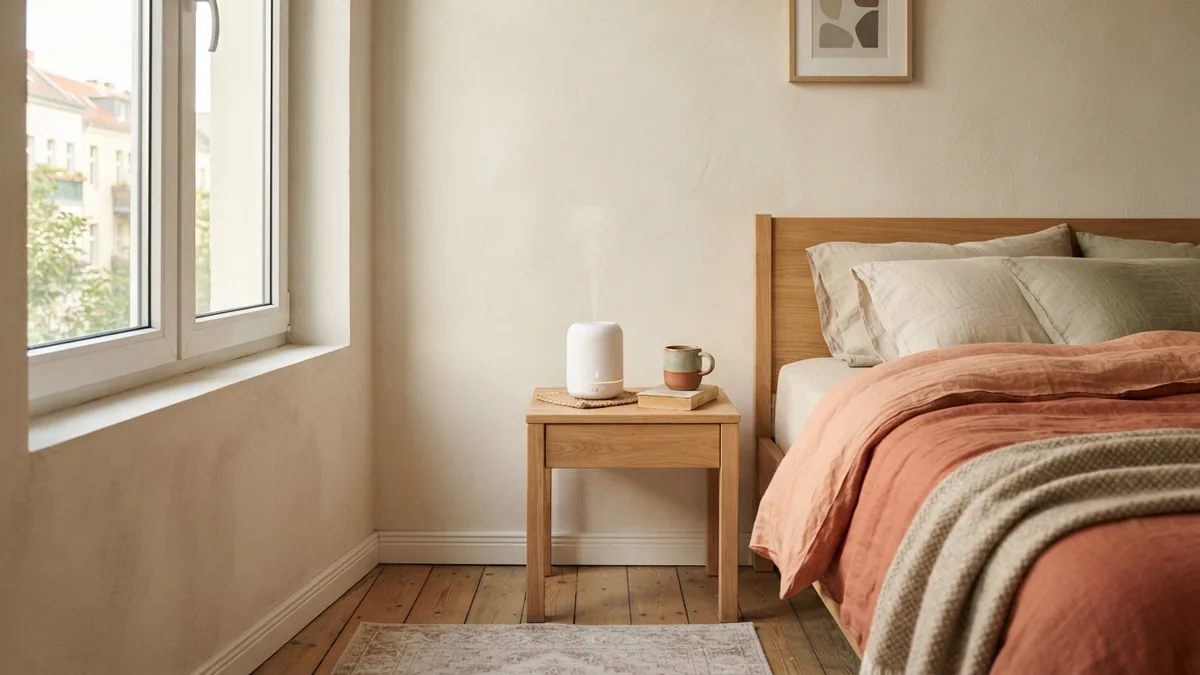
A humidifier is the most reliable way to add moisture to one room. For a smaller boost, set a stable bowl of water away from electronics and the edge of furniture. Water will evaporate slowly, so this method will not work as fast or as well as a humidifier.
Indoor plants release some moisture as they grow, but they are not a strong fix for very dry air. Choose plants that suit the room’s light, and avoid overwatering. Wet soil and standing water can invite mold or pests.
Keep bedroom doors open when it makes sense for your home. This can help air mix with nearby rooms, though it may not raise humidity if the whole home is dry. Avoid drying laundry in a closed bedroom, since extra moisture can build up without good airflow.
- Use a humidifier for a steady, measurable change
- Try a bowl of water for a small, slow boost
- Use plants as a modest extra, not the main fix
- Let air move between rooms when conditions allow
Choosing and using a humidifier well
Cool-mist humidifiers release water as a fine mist or vapor. They do not heat water, which can make them a sensible choice around children. Warm-mist models heat water before releasing steam. Keep them well away from children and pets to reduce burn risk.
Pick a unit sized for the room, and check how often it needs refilling. A small tank may need daily care. Some models use filters, while others rely on regular cleaning and fresh water.
Set the humidifier on a flat, water-safe surface with room around its vents. Aim the mist away from walls, bedding, and wood furniture. Use a hygrometer, and adjust the unit to keep humidity near 30% to 50% without leaving damp surfaces.
Essential oil diffusers are not a substitute for a humidifier. Many add little moisture, and scented oils can bother some people’s airways. Check the device instructions before adding anything to its water.
Natural ways to ease dry air
If you want to know what helps with dry air in a bedroom without a powered device, start with modest options. A bowl of water can help a little, and a few healthy plants may add a small amount of moisture. Neither method gives you precise control over humidity.
Opening the door can help air circulate from a more comfortable part of the home. It will not solve low humidity across the whole house. If you use a diffuser, follow its care instructions and skip scents that cause coughing or irritation.
For a lasting change, combine small habits with a humidity reading. If the room stays below your target, use a humidifier instead of adding many bowls or plants. This keeps the fix easier to track and maintain.
Keep humidity in a healthy range
Check humidity with a hygrometer placed away from windows, vents, and the humidifier’s mist. Read it at different times of day for a more useful picture. If the room often goes above 50%, lower the humidifier setting or turn it off.
Clean a humidifier as often as its maker directs. Empty leftover water, dry the tank, and refill it with fresh water. This helps limit scale and germs in the unit.
Replace filters when the maker says to, and look for leaks or wet spots nearby. Stop using the device if you see damp walls, window condensation, or a musty smell. Those signs suggest too much moisture or poor airflow.
- Measure the room’s humidity before changing settings.
- Use a humidifier only when readings are low.
- Keep humidity near 30% to 50% and watch for dampness.
- Empty, clean, and dry the unit on a regular schedule.
The best way to get rid of dry air in a bedroom is to add only as much moisture as needed. Start with a humidity check, choose a suitable method, and keep the device clean. These steps can make the room more comfortable without creating a damp-air problem.
Frequently asked questions
- How do I fix dry air in my bedroom?
- Measure humidity with a hygrometer, then use a clean humidifier if readings are low. Keep the room near 30% to 50% humidity.
- What helps with dry air in a bedroom without a humidifier?
- A bowl of water, indoor plants, and open doors may offer a small boost. They do not add moisture as reliably as a humidifier.
- Is a cool-mist or warm-mist humidifier better for a bedroom?
- Both can add moisture. Cool-mist models avoid hot water, while warm-mist models heat water and need extra care around children and pets.
- What humidity level is best for a bedroom?
- A range near 30% to 50% is a useful target for most homes. Reduce humidifier use if you see condensation or damp surfaces.
- How often should I clean my bedroom humidifier?
- Follow the maker’s care steps, and empty and refill the tank with fresh water often. Regular cleaning helps limit scale and germs.
Related reading

Couch Placement—Flow, Focus and Comfort
Place your couch to frame a focal point, keep paths clear, and make the room feel balanced.

Master Bedroom — Color, Comfort and Personal Style
Build a calm, personal bedroom with smart choices and a budget that works.

Room Painting Labor Costs — Rates and Budget Factors
See typical room-painting labor rates and learn what drives the final price.