Can a Gallon of Paint Paint a Room? Calculate Your Needs
Use room size to estimate paint needed for one or two coats.
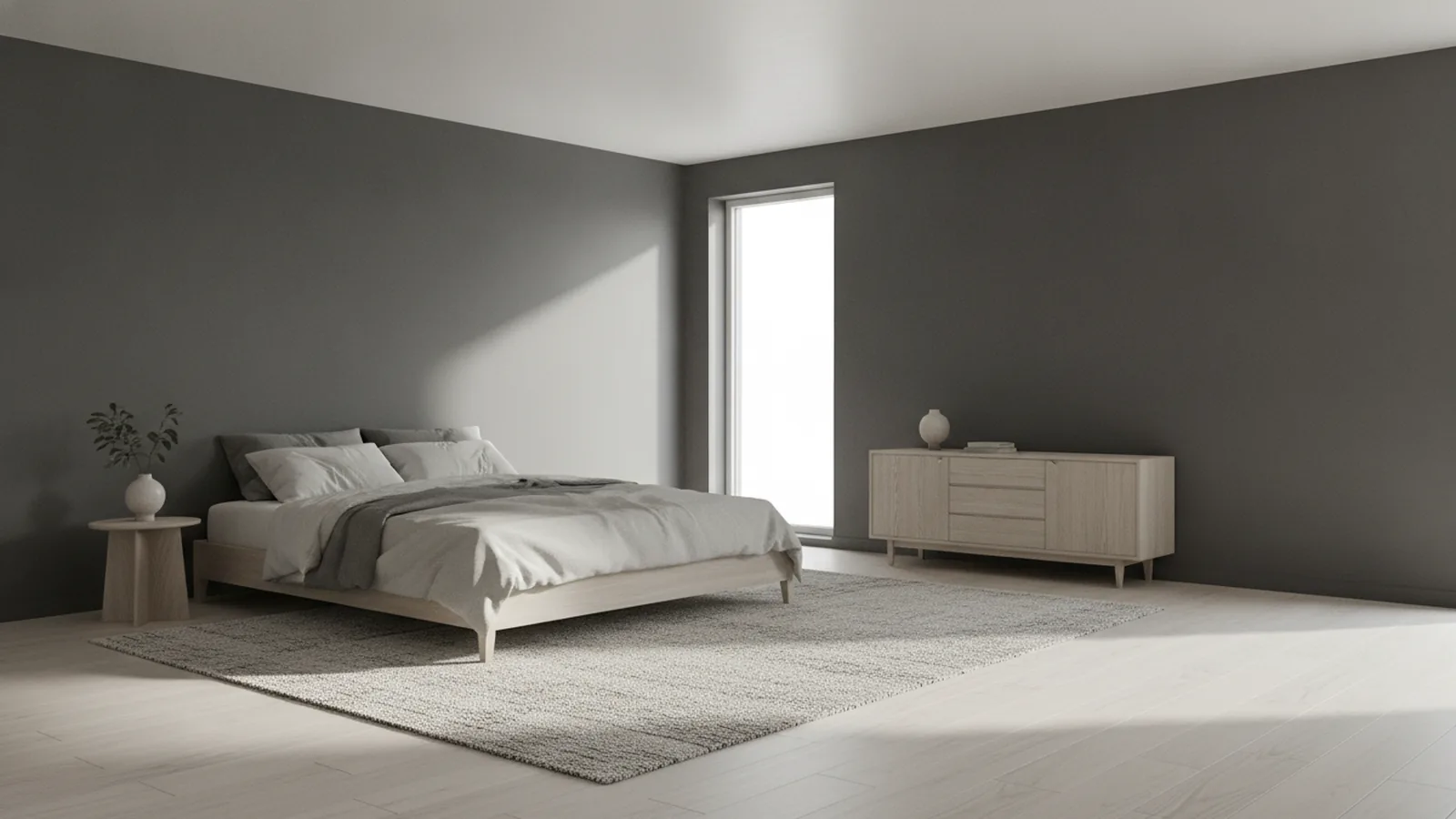
Quick answer: is one gallon of paint enough for a room?
In most cases, one gallon of paint covers about 350–400 square feet. That means you can answer can a gallon of paint paint a room by comparing that range to your wall and ceiling surface area. If your room is small, lightly painted, and you plan for just one coat, it may be enough.
Most rooms require two coats for even color and good hiding. When you plan for two coats, you should assume one gallon covers roughly 175–200 square feet of finished coverage. So is 1 gallon of paint enough for a room depends more on your total surface area than on the room name.
For example, a typical bedroom is often a mix of four walls plus ceiling. Windows and doors reduce the painted area, but not the need for two coats. That is why is one gallon of paint enough for a room can be true for small rooms, and false for larger or darker projects.
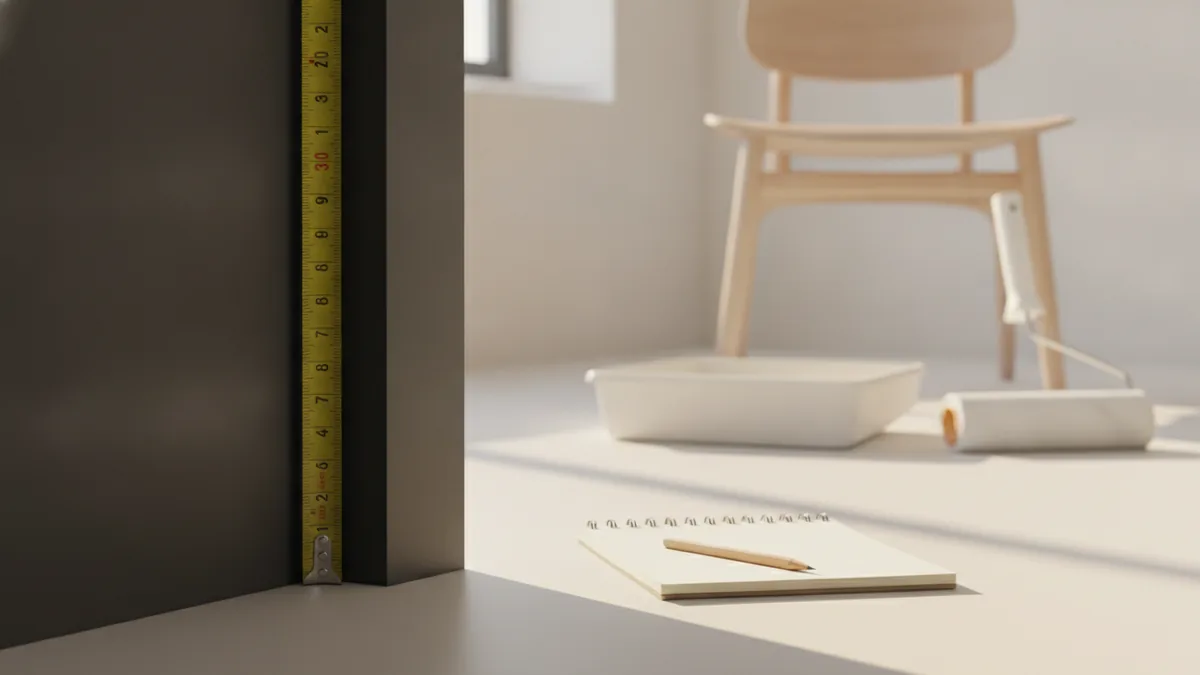
Understanding room size (what to measure)
Start by measuring room dimensions you can trust. Measure the room length and width at the floor. Then measure wall height from floor to ceiling. Even small errors add up when you multiply across four walls.
Next, measure the openings you will not paint. That includes windows and exterior-style door panels, plus any built-in woodwork you plan to keep unpainted. Use the same unit for everything, usually feet, so your surface area math stays clean.
If you are painting the ceiling, measure ceiling area too. In most rooms, ceiling area equals the room length times width. In rooms with cutouts or beams, you may need to break the ceiling into sections.
- Room dimensions: length (L), width (W), wall height (H)
- Openings: window widths and heights, door width and height
- Ceiling: typically L × W if it is a simple rectangle
For a quick check, sketch the room rectangle on paper. Label L, W, and H. Then mark each window and door with its width and height.
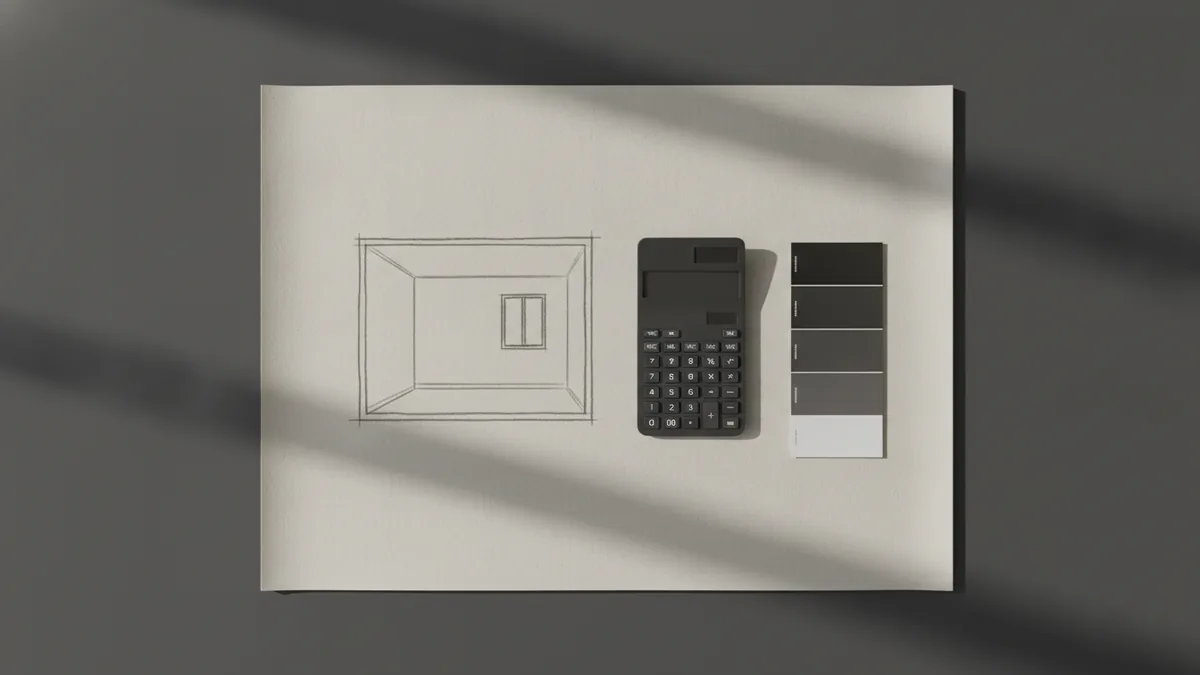
Calculating paint coverage from surface area
Paint coverage is measured by surface area, not by room size alone. A common rule is that one gallon covers about 350–400 square feet for one coat. Use the lower end if you want to be safe, since absorption and paint thickness vary.
The math starts with total wall area. Compute wall area as 2 × (length + width) × height. Then subtract the area of windows and doors. This gives you the net wall area that actually needs paint.
If you are also painting the ceiling, add ceiling area to the net wall area. Ceiling paint is usually part of the same gallon estimate. If your ceiling is a different color, uses a different product, or needs special prep, you may treat it separately.
| Step | What to calculate | Formula (feet) |
|---|---|---|
| 1 | Total wall area | 2 × (L + W) × H |
| 2 | Total opening area | Sum of (window area) + (door area) |
| 3 | Net wall area | Total wall area − opening area |
| 4 | Add ceiling area (if painting) | Net wall area + (L × W) |
Now convert net painted area into gallons. Divide your net painted square feet by paint coverage for one coat. If you plan for two coats of paint, multiply your required gallons by 2, or divide by about 175–200 square feet per gallon of finished coverage.
Example: A bedroom measures 12 ft × 10 ft with 8 ft ceilings. Wall area is 2 × (12 + 10) × 8 = 352 square feet. If you have a 3 ft × 4 ft window (12 sq ft) and a 3 ft × 7 ft door (21 sq ft), openings total 33 sq ft. Net wall area is 352 − 33 = 319 sq ft.
If you paint the ceiling, add L × W = 12 × 10 = 120 sq ft. Total painted area becomes 319 + 120 = 439 sq ft. For one coat at 350–400 sq ft per gallon, you would need about 1.1–1.25 gallons. For two coats, you would need about 2.2–2.5 gallons.
This is the real answer to is a gallon of paint enough to paint a room for many bedrooms. Even with openings accounted for, two coats often push you beyond one gallon.
Factors that change how much paint you really need
Surface type and prep work change paint absorption, which changes coverage. Drywall typically absorbs differently than plaster or stained surfaces. If you are painting over patchy areas, water stains, or bold previous colors, you may need more product to get uniform hiding.
Existing sheen also matters. Glossy walls can cause poor bonding unless scuffed and primed. If you are switching from a dark color to a light color, you may need a dedicated primer or extra coats. This can make is one gallon of paint enough to paint a room an optimistic guess.
Paint finish affects how many coats you want. Matte finishes hide wall imperfections better than glossy finishes. However, glossy coatings reflect more light, and they can highlight patchiness or roller marks. That can lead you to plan extra coverage for smoother results.
- Paint absorption: drywall vs plaster vs sealed surfaces
- Previous color: dark-to-light often needs primer or more coats
- Paint finishes: matte vs eggshell vs glossy changes hiding
- Light reflection in rooms: strong light can reveal uneven coverage
- Color choice impact: subtle shades still need consistent two-coat coverage
Also consider lighting and viewing angles. Side lighting, near windows, and overhead fixtures can show roller texture. If you use a high-reflect finish, surface flaws become more visible. That is why many people end up doing touch-ups, even when their math looked close.
Finally, ventilation and roller technique affect how you apply. Heavier coats use more paint. Faster, thinner coats can require a second pass for uniform color. A gallon estimate assumes normal application and typical tool use.
Estimating gallons for your project (safe rules of thumb)
Use a two-pass approach. First, compute net painted square feet from your measurements. Second, convert that to gallons using your paint’s stated coverage and your coat count.
Then decide how conservative you want to be. If you are brushing or rolling in corners, those areas can take extra paint. If your walls are textured, coverage may drop. If you are rolling over patches, hiding can also take more product.
Here is a practical way to estimate gallons without guesswork.
- Calculate net painted area: walls minus windows and doors, plus ceiling if included.
- Use one-coat coverage: start with 350–400 sq ft per gallon, or check the can.
- Plan for two coats: multiply gallons by 2 for a typical bedroom wall project.
- Add a small buffer: if coverage is tight, add about 10% extra for touch-ups.
- Consider primer needs: stained or dark surfaces may need more than planned.
For is one gallon of paint enough for a bedroom, the safest quick check is this: estimate your bedroom net wall plus ceiling area, then see if it is under about 175–200 sq ft for two coats. If it is larger, expect more than one gallon.
For example, if your net painted area after subtracting openings is around 180 sq ft, one gallon might work for two coats. If it is around 320 sq ft, you will likely need about two gallons. If it is around 440 sq ft, plan closer to 2.3 gallons.
Keep your receipts and record batches. Different paint batches can look slightly different once dried. Mixing batches in the same tray helps for large wall surfaces.
Tips for effective painting so you do not run short
To avoid running out mid-wall, stage your paint supplies before you start. Confirm you have the right amount for two coats, plus any primer and touch-up paint. If you find texture-heavy areas, plan for slightly heavier coats there.
Use consistent application technique. Load the roller the same way each time, and keep a steady wet edge. Cut in neatly so your roller can cover full sections without thin patches. Thin spots are where coverage surprises you later.
Allow proper drying time between coats. Recoating too early can cause uneven drying and color differences. Under-dried paint can also look darker, which tricks you during coverage checks. Once dry, it becomes easier to judge if you truly need a fourth spot coat.
- Check your paint label for exact coverage at your application thickness.
- Measure window and door openings accurately, not roughly.
- Prime stains or patched areas before your finish coats.
- Plan for two coats for best color evenness.
If you want the cleanest estimate, write down your room’s net painted square feet and divide by the can’s stated coverage. Then double it for two coats and add a small buffer. That method usually answers is a gallon of paint enough to paint a room with confidence.
Frequently asked questions
- Can a gallon of paint paint a room?
- Often, yes for one coat, since coverage is commonly about 350–400 sq ft per gallon. For two coats, you usually need about double the amount.
- Is 1 gallon of paint enough for a room?
- It depends on your net painted square feet. If your room needs two coats and is large, one gallon is usually not enough.
- Is one gallon of paint enough to paint a room with a ceiling?
- Usually not for two coats. Adding ceiling area increases total surface area, which pushes gallons higher.
- Is one gallon of paint enough for a bedroom?
- Sometimes for very small bedrooms and one-coat touch-ups. For most bedrooms painted wall-to-wall with two coats, expect more than one gallon.
- How do windows and doors affect paint calculations?
- They reduce the wall area you need to paint. Measure each opening’s width and height, then subtract the total from wall area.
- Does paint finish affect how much paint you need?
- Yes. Matte and darker tones can hide better, while glossy finishes may show patchiness. That can change how many coats you end up using.
Related reading
Kitchen Cabinet Tops — Style, Texture and Seasonal Charm
Style cabinet tops with balanced layers, useful texture, and decor that suits your kitchen.
Couch Placement—Flow, Focus and Comfort
Place your couch to frame a focal point, keep paths clear, and make the room feel balanced.
Master Bedroom — Color, Comfort and Personal Style
Build a calm, personal bedroom with smart choices and a budget that works.