Can You Put a Freestanding Tub in a Small Bathroom?
Yes, with the right tub style, measurements, and layout planning.
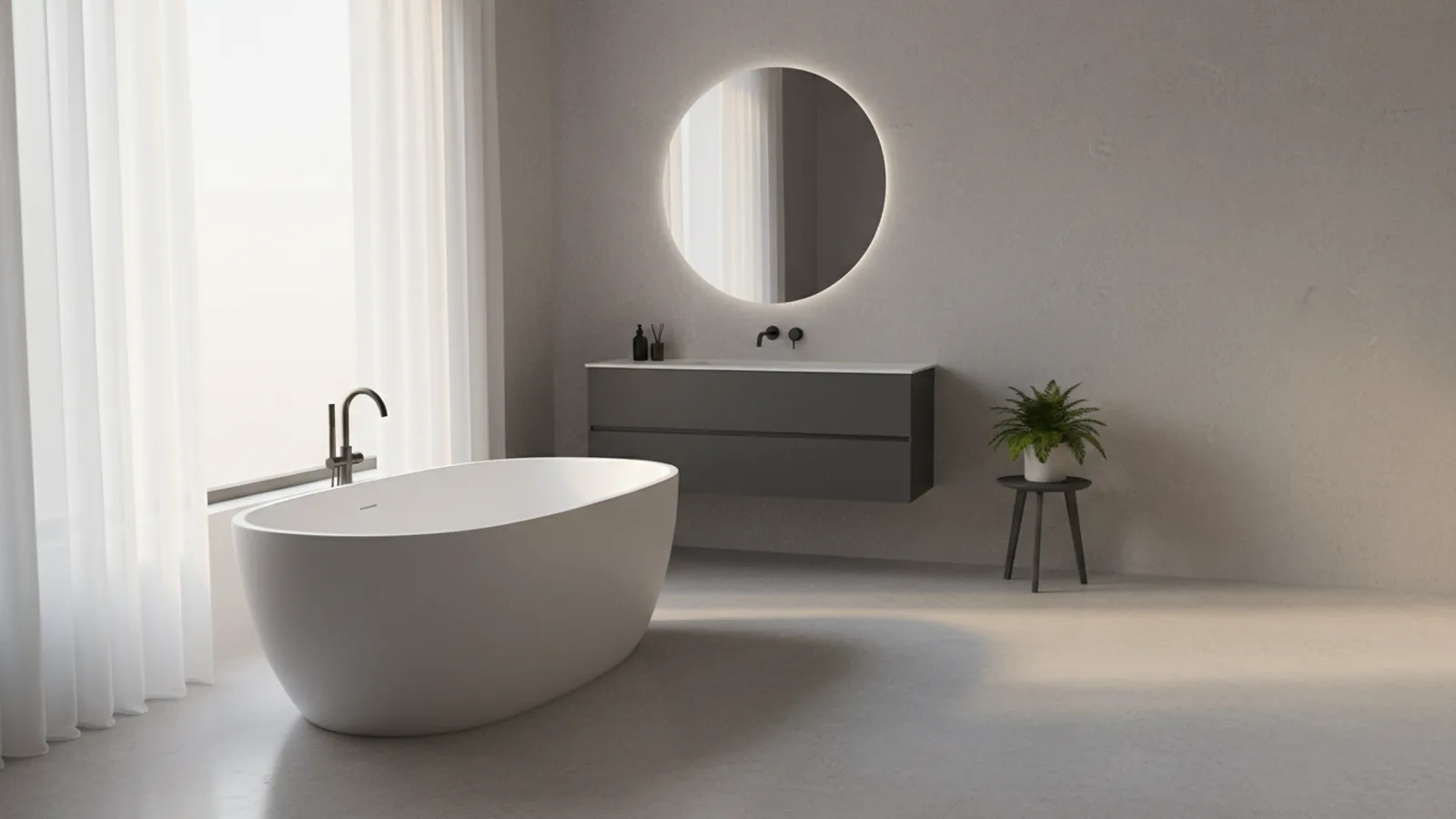
Yes - you can put a freestanding tub in a small bathroom
So, can you put a freestanding tub in a small bathroom? Yes, you can. The trick is choosing a tub style that fits your bathroom footprint and planning the bathroom layout around clear walk paths.
Many people assume a freestanding tub needs a large room. In practice, smaller freestanding tubs are available in compact lengths and widths, so you can still get real soaking depth. The best results come from treating the tub like a centerpiece and designing everything else around it.
In this guide, you will see practical options and the tradeoffs to expect. You will also learn how to fit a tub in a small bathroom without blocking doors, creating awkward traffic flow, or starving storage.
Why freestanding tubs work well (when space is tight)
Freestanding tubs are often designed to stand alone visually. That matters in compact bathrooms because a clean, intentional layout can feel larger even when floor space is limited. A freestanding look can also reduce the visual clutter that happens when too many built-in features compete for attention.
They can also be functional in smaller spaces. Many freestanding designs use a compact footprint while still offering soaking comfort. If you pick the right depth and shape, the tub can still deliver soaking tub benefits like full-leg immersion.
Finally, freestanding tubs simplify some design decisions. You can plan one focal point, then align the vanity, door swing, and toilet clearance around it. That makes bathroom layout planning more predictable than trying to “hide” a tub inside an odd alcove.
Freestanding tub styles for small bathrooms
When people ask how to fit a tub in a small bathroom, they usually mean how to choose a model that does not swallow the room. The right freestanding tub styles can make a compact bathroom feel balanced instead of cramped.
Here are common freestanding tub types that tend to work in smaller footprints:
- Soaking tubs: Narrower and shorter than many spa-style tubs, while still supporting deep soaking.
- Corner freestanding tubs: Place the tub where walls already “claim” space, which helps keep a clear walkway.
- Round or oval tubs: These can maximize bathing area while keeping length down, if your plumbing and door clearances allow it.
If you want both showering and soaking, consider shower-tub combos. A space-saving option is a compact shower enclosure placed next to or behind the tub line, or a tub with a fixed shower panel. This can be a smart answer when you need daily showers but still want a soaking experience.
When selecting freestanding tubs for small bathrooms, look beyond the tub dimensions. Check rim height, access space for entry, and the amount of floor clearance needed around the tub. Even a “small” model can feel too tight if the faucet placement or door swing forces you into a cramped entry.
Design tips that protect space and function
The most common failure point in compact bathroom planning is not the tub size. It is the surrounding layout, especially door swing, toilet clearance, and the path from the vanity to the tub. Start by mapping your bathroom layout with real measurements, then plan around the tub as the anchor point.
Here are design steps that usually improve results fast:
- Measure door swing and clearances first. Doors can eat the same space you need for a tub entry.
- Keep a continuous walk path. Aim for a comfortable pass-by space, not a stop-and-turn moment.
- Choose a tub width that matches your room depth. A narrow bath wall can be a better match than forcing extra length.
- Use a shorter vanity or wall-hung storage. This keeps the floor more open.
Placement matters just as much as size. Placement of windows and fixtures can influence where the tub can sit, especially if you want the best view or need to avoid hitting HVAC vents and electrical runs. If your window sits above the tub area, confirm the tub height and rim clearance so you do not block natural light.
Smaller freestanding tubs can still offer deep soaking experiences. Focus on internal dimensions and water depth rather than only external footprint. Many compact soaking tub models are built for comfort by shaping the seating and back support.
Storage also needs a plan. Using storage solutions around the tub, like a narrow wall cabinet, a recessed niche, or a slim shelf, can keep the area functional without adding clutter. In a small room, every inch should earn its place.
Installation considerations for a smooth tub installation
Even when the tub fits, installation can be the real constraint. Tub installation involves plumbing access, floor support, and waterproofing details that must match the tub type and bathroom layout. Plan early so you do not discover a “fit” problem after demolition.
For freestanding tub installation, verify three areas before purchase. First, check drain and overflow locations so the plumbing can connect with minimal rework. Second, confirm floor readiness and subfloor strength, because many freestanding tubs are heavy once filled. Third, plan the faucet and control placement, since deck mounts can require extra clearances.
How to get a new tub into a small bathroom often comes down to access. A narrow doorway, tight hallway corners, and fragile finishes can limit what you can bring in safely. Measure the tub’s widest point and compare it to your door openings and any turns along the delivery path.
If you are doing a swap, also consider how to remove the old unit and re-route plumbing if needed. The easiest upgrades often keep drain lines near the same location. When moving lines is unavoidable, budget time for wall opening and leak testing.
Finally, confirm ventilation. A small bathroom dries more slowly, especially around a tub with more surface area. Good airflow reduces lingering moisture and helps protect finishes.
Creative layout ideas that work in compact bathrooms
Sometimes, the best answer to how to put a soaking tub in a small bathroom is a clever layout choice, not a compromise on comfort. A well-placed tub can still feel luxurious because the room is organized around it.
Here are layout ideas that often work:
- Corner anchor layout: Put a corner freestanding tub near the wall line, then orient the seating so you face an attractive feature like a window.
- Window-adjacent placement: If your window is above eye level, placing the tub so the rim aligns with light can make the space feel open.
- Vanity-led symmetry: Place the tub as the counterpoint to a centered vanity, which can make the room look intentional.
- Shower-tub combo zoning: Keep the shower area in one zone and use glass or a small curtain system to reduce splash in the tub zone.
If you are also thinking about how to decorate a garden tub bathroom, the same layout rule applies. Choose a small set of materials and repeat them. For example, match the tub’s surrounding finishes to the vanity hardware, and use one accent color on accessories rather than many competing patterns.
When you plan for space-saving designs, aim for fewer bulky items. A slim, wall-mounted shelf can hold towels and keep the floor clear. Use a narrow hamper solution so it does not block the route to the tub or door.
Maintenance tips for small bathroom tubs
Compact bathrooms can be harder on fixtures because moisture stays in the air longer. Maintenance is still simple, but you will want a routine that matches how often you use the tub. Wipe surfaces after showers and tubs to reduce soap scum buildup.
For soaking tub care, pick products that match your tub finish. If you have an acrylic tub, use non-abrasive cleaners. If you have a stone or enamel finish, use gentler methods and avoid harsh powders that can scratch.
Also pay attention to the drain and overflow. In a small room, hair and residue can clog faster because access is tighter and cleaning tools may be limited. A basic drain strainer can help, and periodic checks keep water flowing smoothly.
Finally, protect nearby materials. If the tub is close to wood trim, ensure you seal grout lines and keep caulk in good condition. Small leaks can become big problems when the bathroom is tight and drying is slower.
Quick decision guide: choosing the right tub for your size
If you want a fast way to start, use this framework. First, decide whether you need soaking only or a shower-tub combo. Then choose the tub shape that fits your available footprint without breaking door and toilet clearances.
Next, confirm how the tub will be installed. Check plumbing access, faucet placement, and floor support needs before you commit. Then build your storage plan around the tub so the bathroom stays functional on day one.
With careful planning, freestanding tubs can fit in small bathrooms. They can also look intentional and feel comfortable, even when every inch counts.
Featured image note: A tight bathroom scene showing a compact freestanding tub with clear walk space and smart storage.
Frequently asked questions
- Can you put a freestanding tub in a small bathroom without it feeling cramped?
- Yes. Pick a compact soaking tub or a corner style and plan clear walk paths around doors and the toilet.
- How to fit a tub in a small bathroom when space is really tight?
- Start with measurements for door swing and plumbing locations. Then choose the smallest freestanding tub that still gives you the soaking depth you want.
- How do you put a soaking tub in a small bathroom?
- Choose a compact soaking tub first, then anchor the bathroom layout around it. If you need a shower too, plan a shower-tub combo so you get both options.
- How to get a new tub into a small bathroom during a remodel?
- Check delivery access and widest tub dimensions before ordering. Keep plumbing near the existing drain if possible to reduce rework.
- What’s the best shower-tub combo approach for small bathrooms?
- Use a compact shower enclosure next to the tub zone. Glass or a tight curtain setup can reduce splash while keeping the room functional.
- How do you maintain a small bathroom tub so it stays clean and safe?
- Wipe surfaces after use to prevent scum buildup and keep caulk and grout in good shape. Also check the drain and overflow regularly for slow flow.
Related reading
Kitchen Cabinet Tops — Style, Texture and Seasonal Charm
Style cabinet tops with balanced layers, useful texture, and decor that suits your kitchen.
Couch Placement—Flow, Focus and Comfort
Place your couch to frame a focal point, keep paths clear, and make the room feel balanced.
Master Bedroom — Color, Comfort and Personal Style
Build a calm, personal bedroom with smart choices and a budget that works.