Pink Bathroom Tile — Colors, Accents and Styling
Pair pink tile with thoughtful colors, warm accents, and simple accessories.
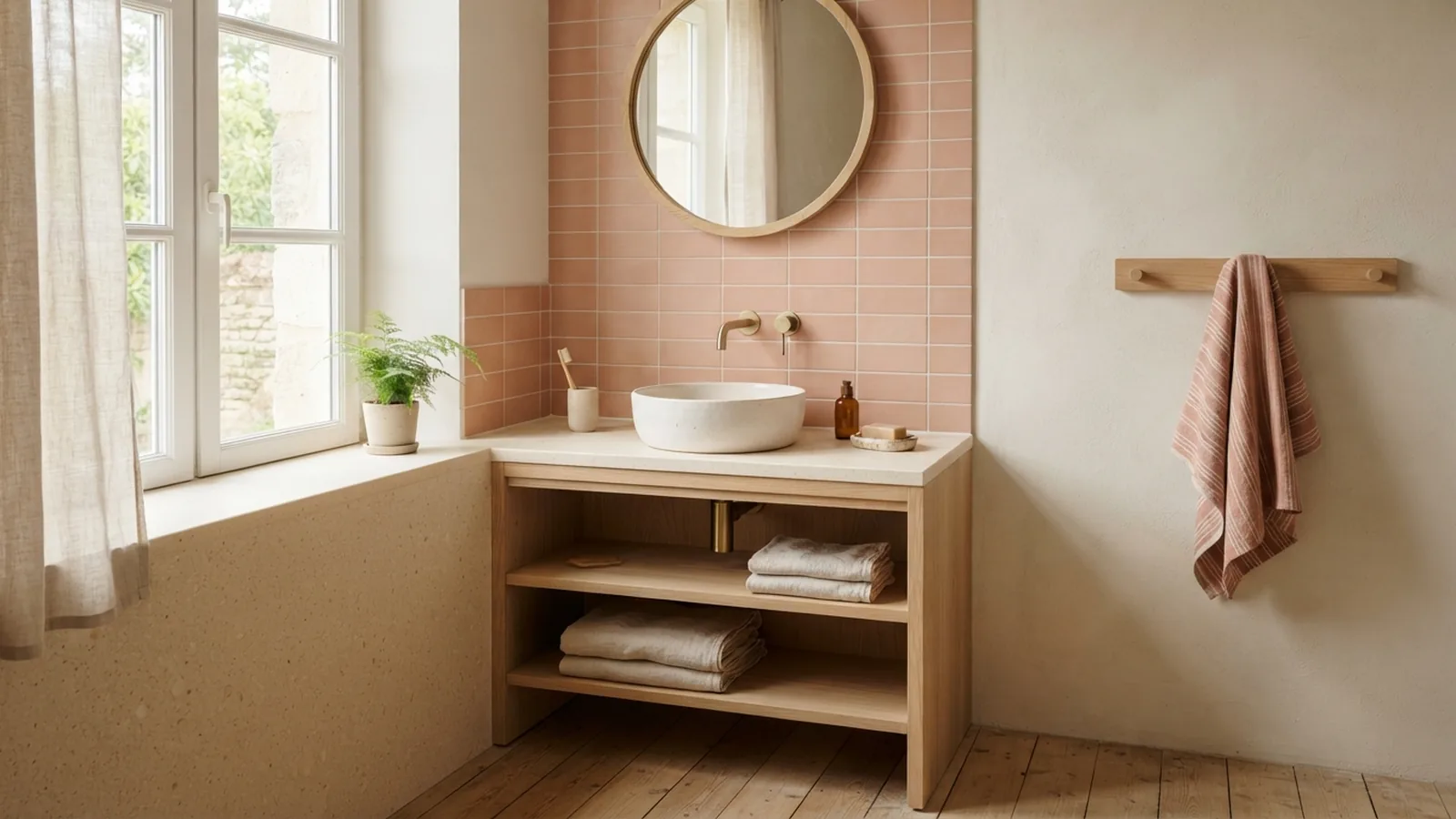
Understand Your Pink Bathroom Tile
The best colors for pink bathroom tile depend on its shade, undertone, and finish. Pastel pink feels soft and light. Brighter rose or salmon can hold its own beside deeper shades, such as navy or forest green.
Look at your tile in daylight and under the bathroom lights. Pink can lean peach, dusty rose, or cool mauve. Warm pinks often suit cream and brass. Cooler pinks can pair well with gray, lavender, and silver-toned details.
The tile’s finish also shapes the room. Glossy tile reflects light, while matte tile feels more subdued. Hold a tile sample near the walls, floor, and mirror before choosing paint or fabric. Small changes in light can shift how a color looks.
- Blush or pastel pink: try warm white, sage, or pale wood.
- Dusty rose: pair it with cream, soft gray, or muted olive.
- Vibrant pink: balance it with white or a small dose of deep color.
Start with what is already in the room. The tile sets the tone.
Choose Colors That Complement Pink Tile
White, gray, and beige are steady partners for pink tile. Warm white keeps the room bright without making pink feel sharp. Beige adds a natural note. Light gray can suit cool pink, but a warmer gray helps prevent a chilly look.
If you wonder what color goes with pink bathroom tile, begin with its undertone. Then choose one main neutral and one supporting shade. This keeps the palette connected without matching every surface. It also gives you room to bring in texture and detail.
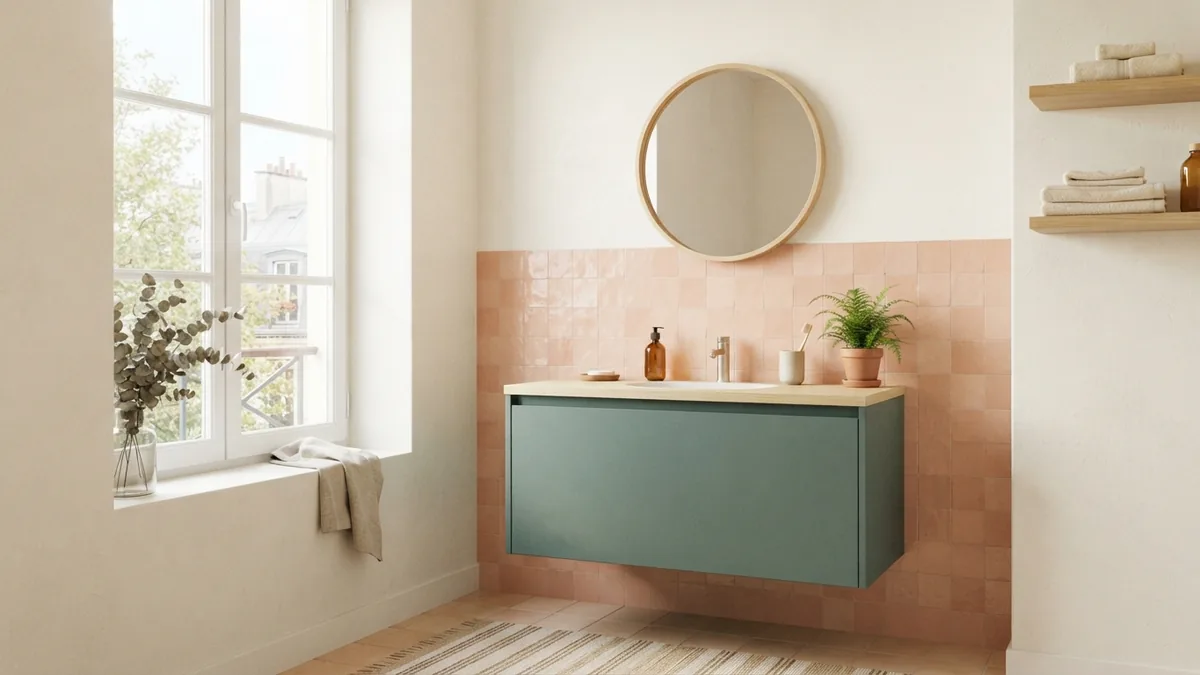
For a stronger contrast, try navy blue or dark green. Use these colors on a vanity, wall, or small trim area. They set off pink tile without taking over the room. Deep shades work best when daylight or white surfaces keep the space open.
Soft pastels offer a gentler mix. Mint green, pale yellow, and lavender can all sit well beside pink. Keep them muted, especially in a small bathroom. One pastel wall, pink tile, and white towels can feel calm. Several bright pastels may look busy.
- Blush tile, warm white walls, and pale oak create a quiet modern feel.
- Dusty rose tile, soft gray paint, and sage fabric make a calm mix.
- Pink tile, a navy vanity, and white trim give crisp contrast.
When considering what color goes with pink tile bathroom schemes, think about the room as a whole. Look at the tile, wall color, fixtures, and floor together. A useful color wheel can help you spot gentle contrasts, but your own samples matter more.
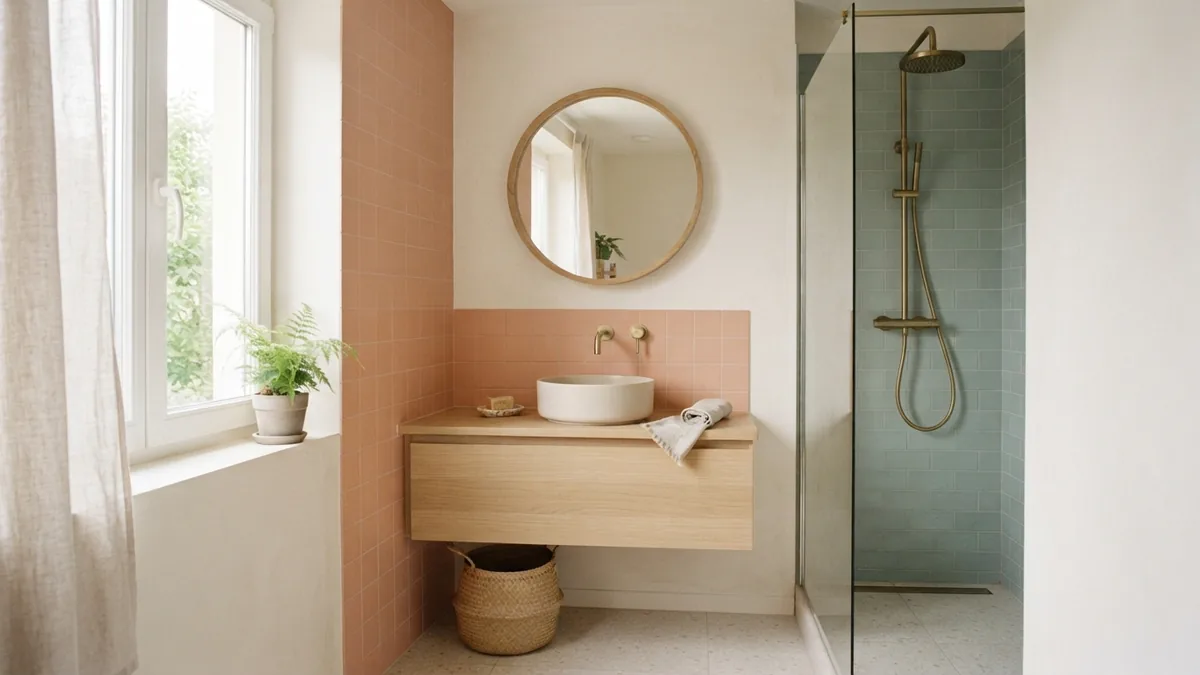
Add Accent Colors with Care
Accents add depth without changing every surface. Gold or brass brings warmth to pink tile and suits vintage or classic rooms. Try it on taps, drawer pulls, a mirror frame, or a wall light. Repeating the finish in two or three places makes the choice feel planned.
Green can also work well as a small accent. Sage feels restful beside pale pink. Dark green gives brighter pink a bolder edge. If you paint one wall in a strong shade, keep the nearby surfaces simple.
Color can come from texture, too. A wooden stool, linen curtain, or ceramic soap dish adds warmth without more paint. Choose useful pieces and leave some counter space clear. A few well-placed objects can have more impact than many small ones.
Test an accent with a towel or tray before painting. Live with it for a few days. Notice how it looks in morning light and after dark. Then decide whether it belongs on a larger surface.
Consider Bathroom Style and Tile Trends
Pink tile can suit both modern and vintage rooms. For a modern look, pair it with plain white surfaces, clean lines, and a simple mirror. Keep the number of colors low. Pale wood can soften the room without making it feel old-fashioned.
A vintage bathroom can lean into the tile’s age. Brass, curved shapes, and a small floral detail can help the room feel at ease. You do not need to recreate a period room. Pick one or two cues, then keep the rest simple.
Muted colors and natural finishes can make pink tile feel current. Try warm white, pale wood, or soft sage. The tile can be a feature rather than a problem to cover. Choose a style that fits the home, not just a passing trend.
Fixed surfaces deserve extra thought. Paint and towels are easy to change, but tile is not. Keep the lasting parts at the heart of your palette. Stand in the doorway and notice where your eye lands first.
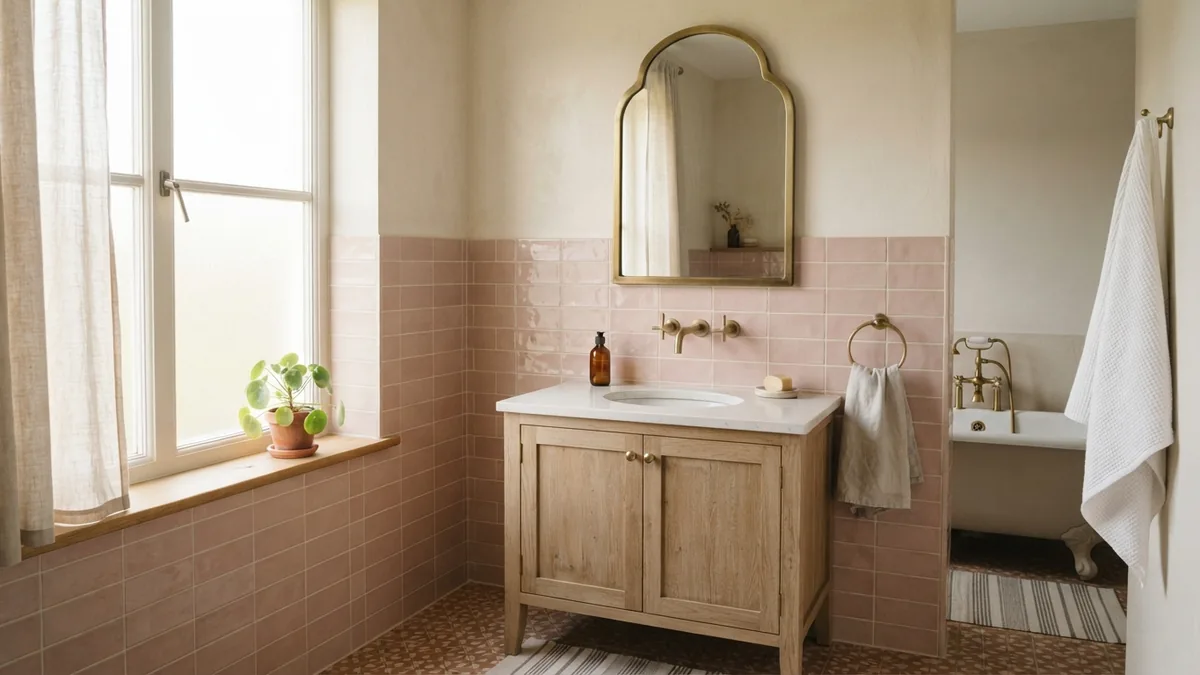
Choose Accessories for a Pink Bathroom
Accessories let you test a palette with little effort. Start with towels, a bath mat, and a shower curtain. Pick one or two colors, then use white or cream to give the eye a rest. Repeat a shade once or twice to make the room feel joined up.
Metal finishes affect the mood as much as fabric. Brass and gold add warmth, while brushed nickel feels quieter with cool pink. Keep most visible metal close in tone. A mix can work when one finish leads and the others stay subtle.
Plants can bring a fresh green note, if the room has enough light. Choose a plant that suits the space and keep it away from wet surfaces. If a live plant is not practical, sage towels or a small ceramic piece can offer a similar color note.
Think about how each item works as well as how it looks. A stool can hold towels, and a tray can group daily items. Keep the counter clear enough for daily use. That balance helps a small bathroom feel calm.
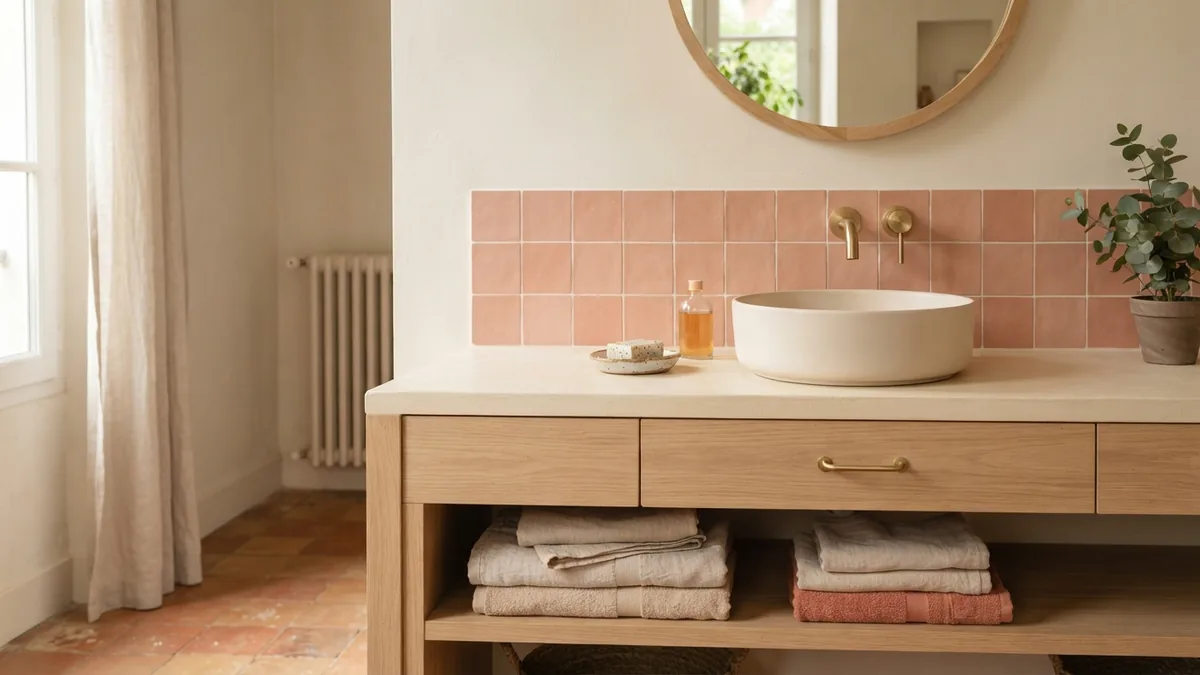
Try These Pink Tile Color Schemes
A soft scheme works well with blush tile. Use warm white on the walls, pale oak for a shelf or stool, and sage in towels. Brass details add a little warmth. This mix suits a bright room that should feel gentle rather than stark.
For a stronger look, pair rose tile with deep green or navy on one feature. Keep the floor and trim light. Choose plain fabrics and simple shapes so the dark shade does not compete with the tile. This is a useful option when the room gets good daylight.
A vintage scheme can pair dusty pink with cream, muted olive, and brass. Use color in small areas, such as a curtain or painted frame. For a cleaner modern scheme, choose pink tile, white walls, and one pale wood detail. Both plans let the tile remain the focal point.
Use large swatches to compare these ideas in your room. Put them beside the tile and view them at different times of day. A small paint chip may look unlike a full wall. Samples make the final choice easier.
Tips for Color Coordination
Keep your palette simple. Choose the tile as the starting point, then add a main neutral and one accent. This gives the room a clear shape. You can still use varied textures, such as linen, wood, and matte ceramic.
Repeat colors in more than one place. A green towel can echo a plant or small ceramic dish. Brass taps can tie in with a mirror frame. Repeated details help the palette feel deliberate, not over-matched.
Check every color in the room before you buy paint or larger items. Daylight, bulbs, and nearby surfaces can change how shades appear. Hold swatches against the tile and look from the doorway. If the room feels too busy, remove one accent rather than adding another.
Most of all, let the fixed tile guide your choices. Pink does not need to be hidden or matched exactly. A thoughtful mix of neutral shades, soft contrast, and useful accessories can make it feel right at home.
Frequently asked questions
- What color goes with pink bathroom tile?
- Warm white, beige, and soft gray are easy pairings. Sage, navy, or muted green can add contrast, depending on the tile’s shade.
- What color goes with pink tile in a bathroom?
- Choose colors that suit the tile’s undertone. Warm pink often works with cream and brass, while cool pink can suit gray or lavender.
- Can pink bathroom tile look modern?
- Yes. Pair it with clean lines, simple white surfaces, and a restrained palette. Pale wood can add warmth.
- What metal finish works with pink bathroom tile?
- Brass and gold bring warmth to pink tile. Brushed nickel offers a quieter look, especially with cooler pink shades.
- How can I test paint colors beside pink tile?
- Place large paint swatches beside the tile and view them in daylight and under your bathroom lights. Check them from the doorway, too.
Related reading
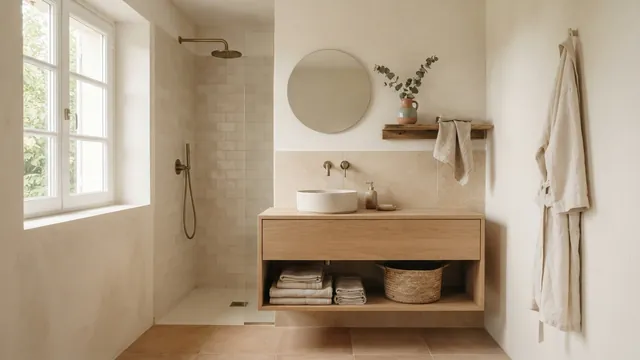
Beige Bathroom Tiles: Paint Colors and Accent Ideas
Pair beige tiles with calm, warm, or bold wall colors.
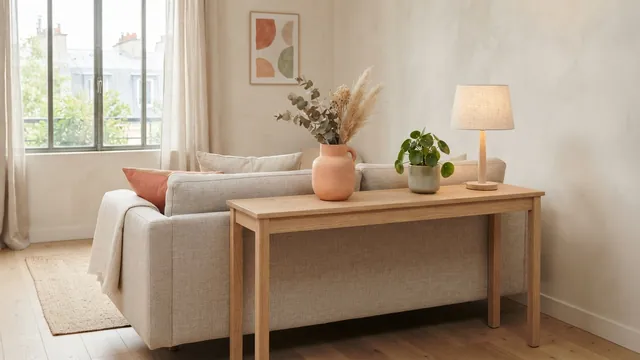
Console Tables — Placement, Styling and Smart Storage
Choose the right spot, size, and styling for a console table that works.
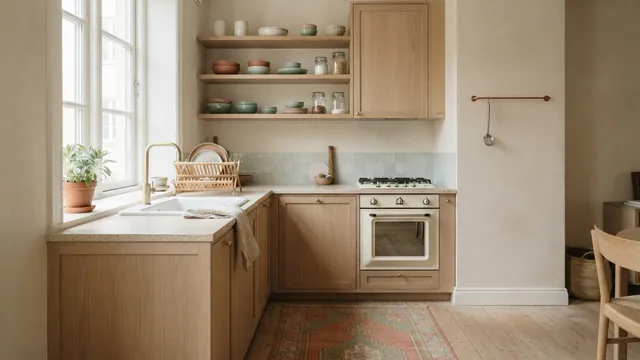
Small Kitchen Costs — Prices, Choices and Budget Tips
Compare small kitchen prices, key cost drivers, and ways to keep a remodel on budget.