Glass Kitchen Cabinets: Color and Order
Style glass cabinets with color, balance, and a few well-chosen pieces.
Start With the Right Glass Cabinet Style
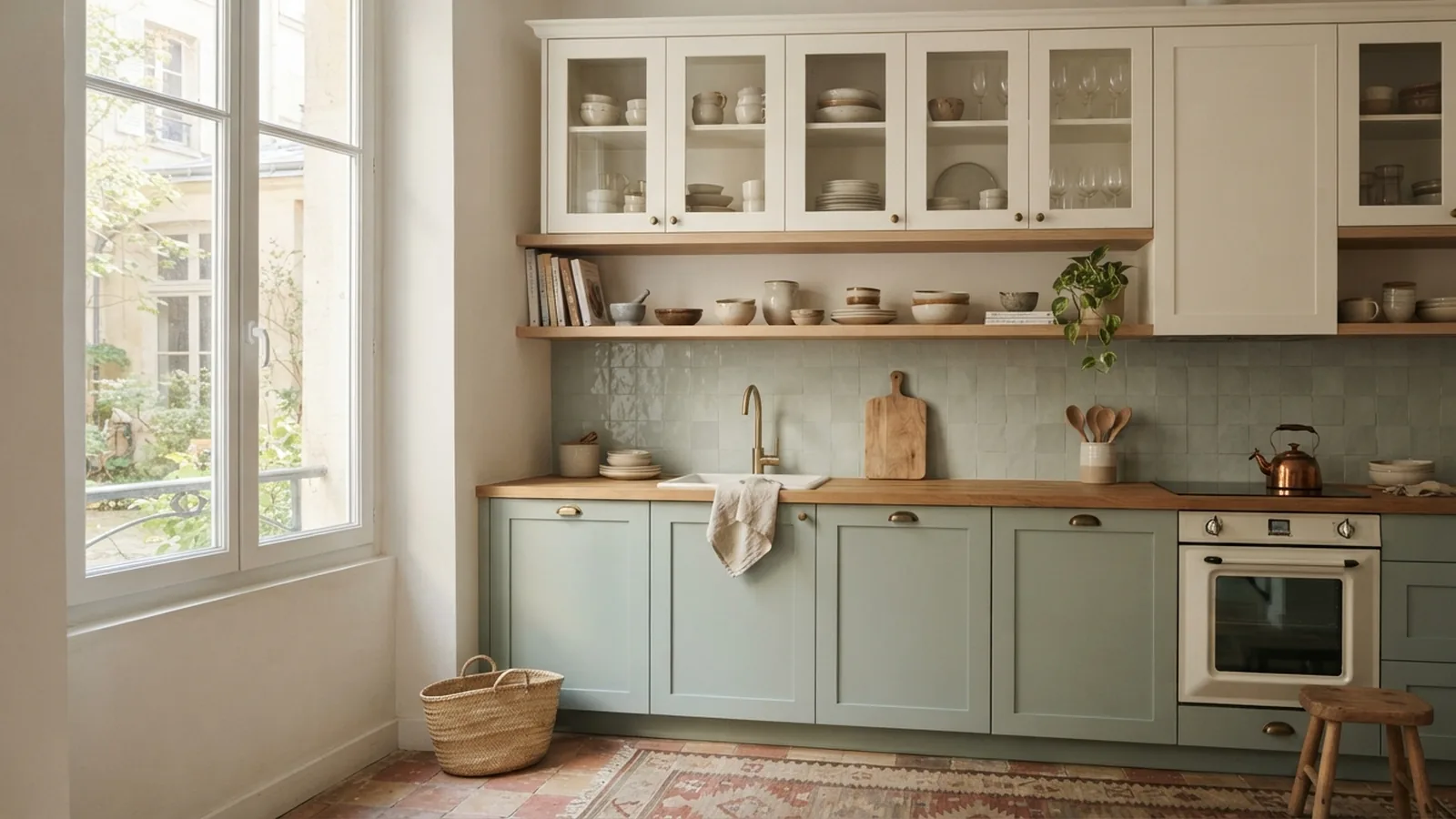
To decorate glass kitchen cabinets well, start with the glass type and cabinet frame. Clear glass suits neat dishware and calm displays. Frosted glass hides shelf clutter while still letting light pass through. Reeded or ribbed glass adds texture and softens the view.
Framed doors bring a classic feel to farmhouse and traditional kitchens. Frameless doors look sleek in modern spaces. Think about the view from across the room. Glass cabinets should support the kitchen style, not compete with it.
- Use clear glass for plates, bowls, and simple serving pieces.
- Choose frosted glass when you need more visual cover.
- Try ribbed glass for texture in a plain kitchen.
- Pair framed doors with warm wood and aged metal.
- Pair frameless doors with flat fronts and pale finishes.
Upper cabinets often work best with clear or lightly ribbed glass. Lower glass doors can feel busy near worktops. Place glass fronts where they frame a useful display.
Why Glass Cabinets Improve a Kitchen
Glass doors make a kitchen feel more open. They break up a long run of solid fronts. They also reflect soft daylight and help pale rooms feel brighter. This effect works well in apartment kitchens with limited floor space.
Glass cabinets also give everyday items a clear home. A stack of bowls can become part of the room design. Favorite mugs can add a small hit of color. You gain display space without adding a freestanding shelf.
The best results come from mixing beauty with use. Keep daily dishes near the dishwasher or prep area. Put special pieces in a cabinet that is easy to see but less often opened. This plan keeps the display useful.
Creative Ways to Decorate Glass Kitchen Cabinets
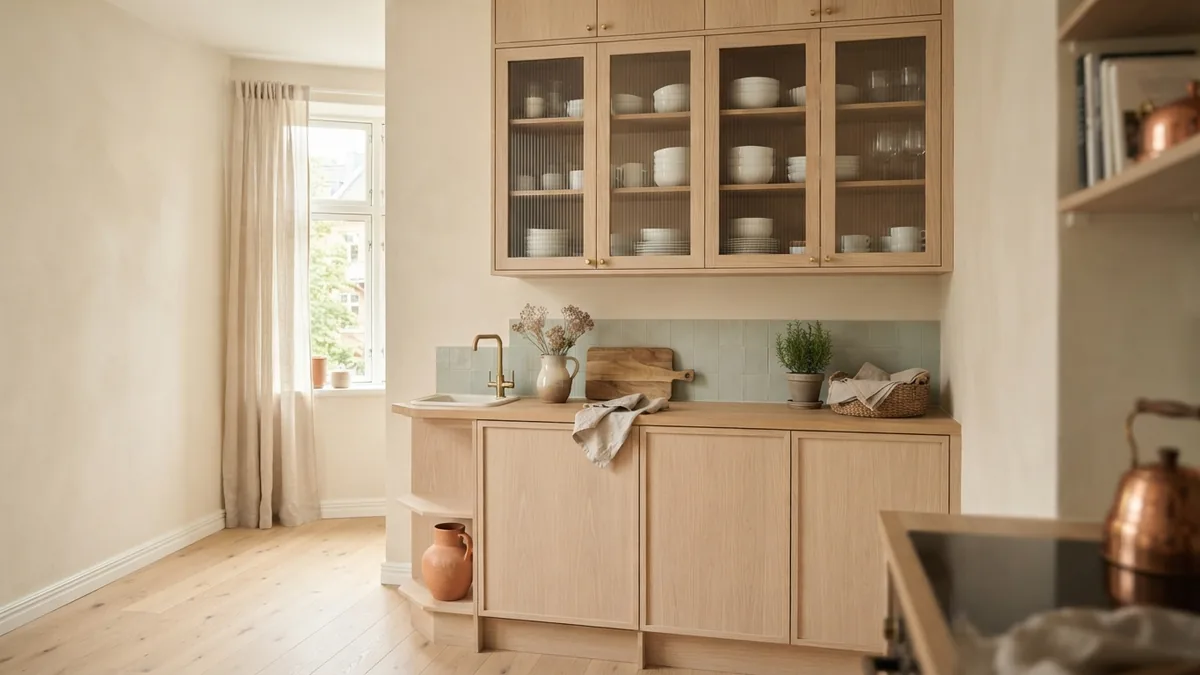
Color gives glass shelves their strongest design link. Pick one base color, one soft accent, and one wood or metal tone. For example, use cream dishes, sage bowls, and pale oak boards. The same colors can appear in nearby rugs, curtains, or art.
Repeat shapes as well as colors. Round plates look good beside round bowls or a curved vase. Tall jars can balance short stacks. Leave space between groups so each item has room to stand out.
When you learn how to style glass kitchen cabinets, think in small scenes. Build each shelf with a tall piece, a low stack, and one open gap. This simple pattern works across many kitchen styles.
- Warm neutral: Pair ivory ceramics with wood boards and woven baskets.
- Soft coastal: Use white dishes, pale green glass, and light linen.
- Farmhouse: Mix stoneware, aged wood, and muted terracotta.
- Japandi: Keep shapes simple and use fewer, larger pieces.
- Color-led: Repeat one accent shade across two or three shelves.
Lighting for glass cabinets can make the display feel finished. Small warm lights under shelves show texture without glare. Hide the light source when possible. Soft light works better than bright strips that flatten every object.
What to Put Inside Glass Cabinets
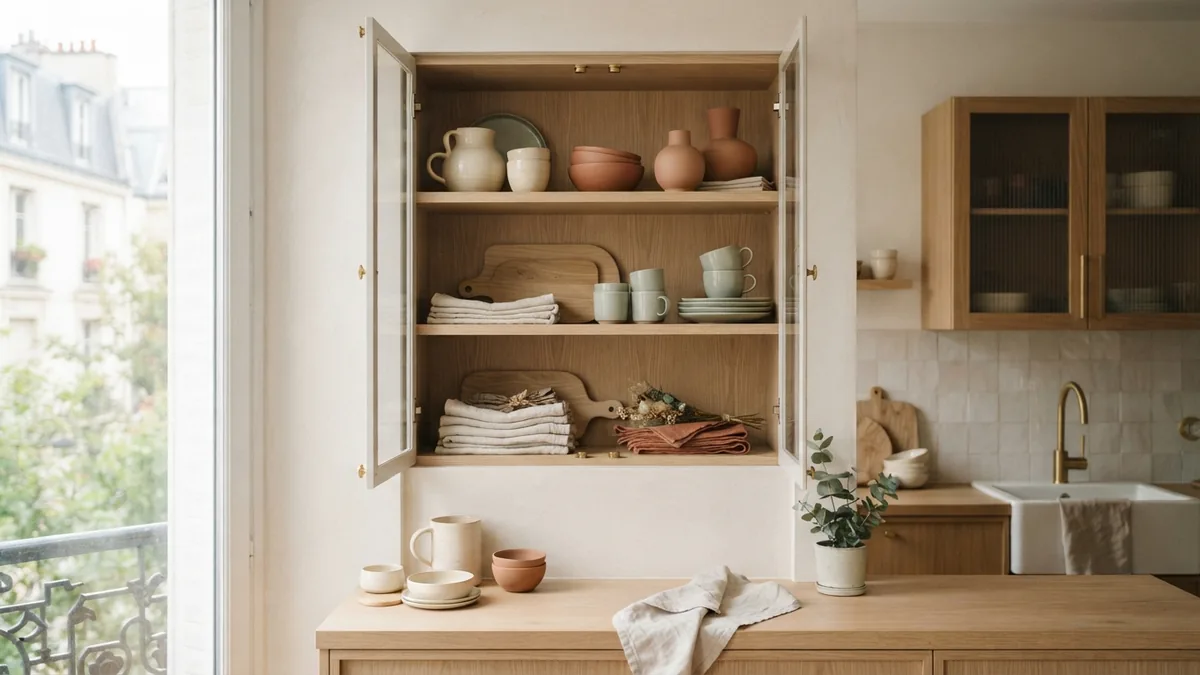
The right display items should look good and earn their space. Start with pieces you use often. White plates, stoneware bowls, and clear tumblers create a quiet base. Add a few special pieces for shape and color.
Cookbooks can work well in a glass cabinet. Stand two or three books upright, then place a bowl or small vase beside them. Turn the plain page edges outward if you want a calmer look. Avoid packing books into every shelf.
Decorative glass jars in a kitchen can hold pasta, oats, dried beans, or baking goods. Use matching jars for a clean view. Keep food fresh and label each jar outside the cabinet if needed. A row of similar forms creates order.
- Place the largest items first, such as platters or serving bowls.
- Add medium pieces, such as plates, mugs, and cookbooks.
- Fill small gaps with one vase, jar, or folded linen.
- Step back and remove one item from each crowded shelf.
Use a tray to group small items. Try a shallow wood tray for spice jars or tea cups. Keep fragile objects away from the cabinet edge. Leave enough room to remove daily dishes with one hand.
How to Style Upper Glass Kitchen Cabinets
Upper cabinets sit at eye level, so their contents need a clear shape. Put large plates at the back and smaller bowls in front. Use risers when a back row disappears. This method lets you see more without adding clutter.
To decorate upper glass kitchen cabinets, work from left to right across the run. Repeat one color every few doors. Then add one taller object at each end. This creates balance without making every cabinet look the same.
Glass door kitchen cabinets can also support an open shelving concept. Keep the shelves edited like a styled shelf, but protect them from dust behind the doors. Choose two or three item groups per cabinet. More groups can make the view feel restless.
Keep Glass Cabinets Clean and Organized
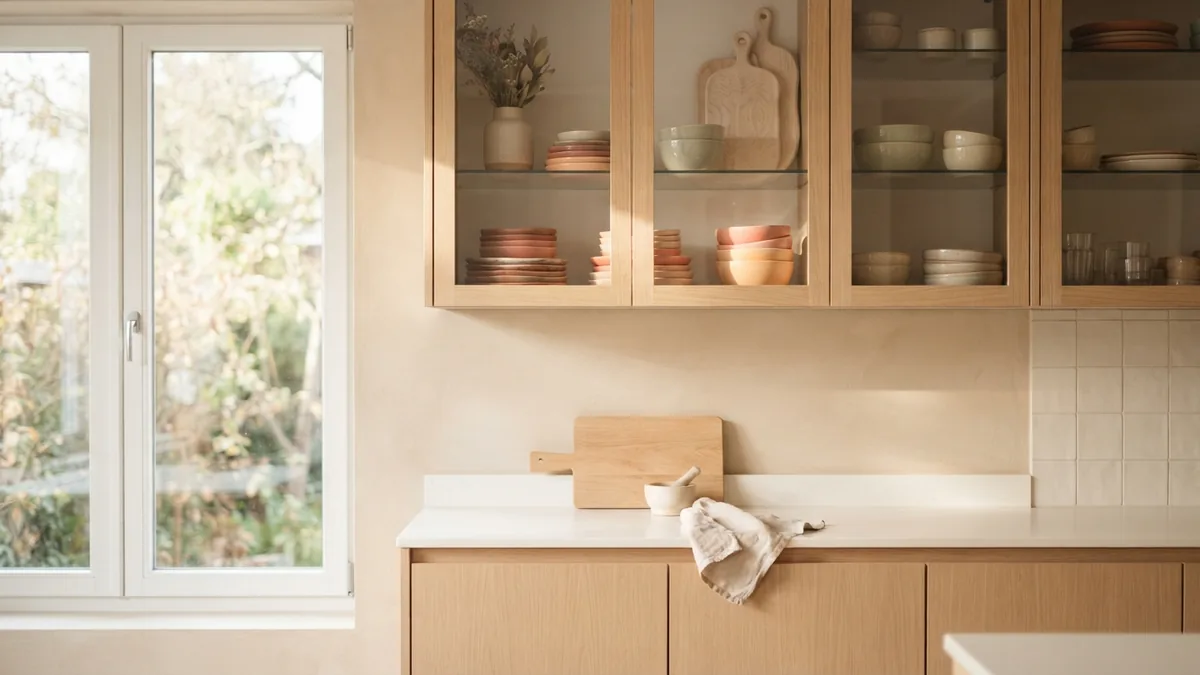
Dust and fingerprints show quickly on clear glass. Wipe the panes with a soft cloth once each week. Use a mild glass cleaner on the cloth, not across the whole door. This keeps spray away from wood frames and cabinet seals.
Clean the inside shelves during your regular kitchen reset. Remove the contents, wipe each shelf, and let it dry fully. Check jars for crumbs and plates for chips. Return only items that still suit the display.
Organization matters as much as surface care. Group plates with plates and cups with cups. Keep heavy items on lower shelves when the cabinet design allows it. Store rarely used pieces higher up or behind frosted glass.
- Use shelf risers to create two clear levels.
- Group items by use before grouping them by color.
- Leave about one-third of each shelf open.
- Keep matching sets together when they make daily tasks easier.
- Rotate seasonal pieces instead of forcing every item into view.
Check the display from the main doorway. A cabinet can look fine up close but busy from across the room. Edit anything that blocks the view or breaks the color flow.
Common Glass Cabinet Styling Mistakes
Overcrowding is the most common mistake. A full shelf hides the cabinet shape and makes cleaning harder. Remove similar items first. Keep the pieces with the best shape, color, or use.
Poor item selection can also weaken the room. Random packaging, chipped dishes, and mismatched plastic can distract from the display. Store those items behind solid doors. Glass fronts work best for items that can handle attention.
Another mistake is using the same height on every shelf. A flat line of matching plates can look dull. Add height with a board, vase, or upright cookbook. Keep the change gentle so the display still feels calm.
- Do not fill every shelf to its edge.
- Do not mix too many bright colors.
- Do not place fragile pieces where daily use may knock them down.
- Do not ignore the cabinet view from the rest of the room.
- Do not use strong lighting that creates glare on the doors.
The goal is a display that feels useful, light, and linked to the rest of the kitchen. Start with fewer items than you think you need. Add only what improves the view or supports daily life.
Frequently asked questions
- How do you decorate glass kitchen cabinets?
- Start with useful dishes in a calm color scheme. Add a few cookbooks, jars, or decorative pieces, then leave open space around each group.
- What should you put in glass kitchen cabinets?
- Use plates, bowls, mugs, serving pieces, cookbooks, jars, and small ceramics. Choose items that look good and support daily kitchen tasks.
- How do you style upper glass kitchen cabinets?
- Place large pieces at the back and smaller pieces in front. Repeat one color across the cabinet run, then leave open gaps to reduce visual clutter.
- How can you keep glass cabinet doors clean?
- Wipe the glass each week with a soft cloth and mild cleaner. Clean the shelves during kitchen resets, and keep spray away from wood frames.
- How much should you put in a glass cabinet?
- Aim to leave about one-third of each shelf open. This gives dishes room to stand out and makes the cabinet easier to clean.
Related reading
Large Living Room Walls — Scale, Style, and Warmth
Use scale, art, texture, shelves, and light to make a large wall feel balanced.
High Ceilings — Warmth, Scale and Style
Use color, scale and soft textures to make tall rooms feel inviting.
Long Walls — Ideas That Add Balance and Character
Make a long wall feel balanced with color, art, shelves, and warm light.